
Pregnancy can change your body fast, and back pain is one of the most common changes you may face. You can ease much of this pain with simple posture shifts, safe exercises, and at-home measures while knowing when to get professional help.
This post explains why back pain happens during pregnancy, what signs to watch for, and which daily habits make pain better or worse. You will also find safe exercises, home relief tips, and guidance on when to see a clinician so you can manage pain and stay active.
Common Symptoms and Presentation
You may feel different kinds of back pain during pregnancy. Pain can be sharp, dull, constant, or come and go, and it often affects your lower back and buttocks.
Types of Pregnancy-Related Back Pain
- Lumbar (lower back) pain: You feel a deep ache in the lower spine and around the hips. It often worsens when standing, lifting, or after long periods of sitting. Pain may spread down the buttocks but usually stops above the knee.
- Pelvic girdle pain (PGP): You notice pain at the front and back of the pelvis, often near the tailbone, pubic bone, or the joint between the pelvis and the sacrum. Pain can be sharp when you roll over, climb stairs, or put weight on one leg.
- Sciatica-like pain: You get sharp, electric pain or tingling that shoots from the low back through the buttock into one leg. Symptoms typically follow one nerve path and can increase with certain movements.
- Muscle strain and ligament pain: You feel soreness and stiffness after activity. Ligament pain is often brief and stabbing with sudden movements.
Timing and Duration
Back pain can start as early as the first trimester but most often appears in the second or third trimester. You may notice new pain as your belly grows and your center of gravity shifts.
Some pain is short-lived, lasting a few minutes to hours after activity or position changes. Other pain becomes persistent, continuing for days or weeks, especially without changes in posture or activity.
Pain often increases toward the end of the day. Rest, heat, posture changes, or gentle movement may ease symptoms temporarily. If pain is sudden, severe, or comes with fever, bleeding, or numbness in the legs, seek medical care right away.
Primary Physiological Mechanisms
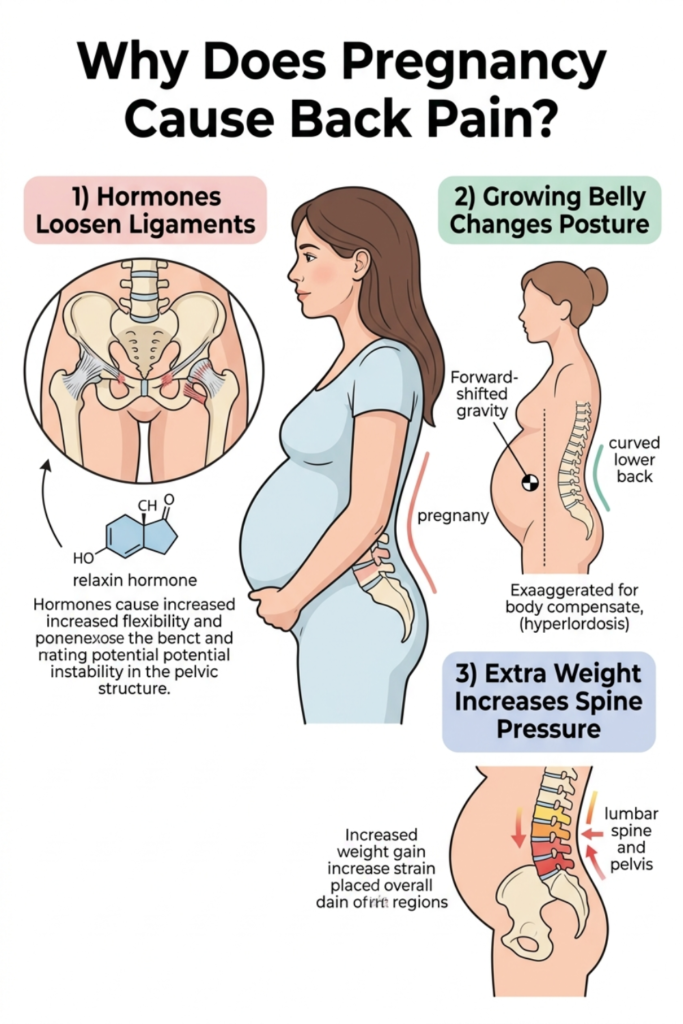
Pregnancy changes your body in three main ways that raise your risk of back pain: hormones that loosen tissues, shifts in your posture, and extra weight that stresses joints and muscles.
Hormonal Influences
Your body raises production of relaxin and progesterone to prepare your pelvis for childbirth. Relaxin loosens ligaments around the pelvis and sacroiliac joints. This increased laxity can let small joint shifts occur, which irritate nerves and cause aching or sharp pains.
Progesterone relaxes smooth muscle and can slow digestion, which sometimes changes how you move and stand. Hormonal effects peak in the first and third trimesters, so pain may come and go. You can reduce discomfort by stabilizing the pelvis with a support belt and avoiding sudden twists or one-legged standing.
Postural Changes
As your belly grows, your center of gravity moves forward. You naturally lean back more to balance, increasing the curvature of your lower spine (lumbar lordosis). That extra curve strains lumbar muscles and compresses facet joints.
You may also tighten your hip flexors from sitting more, which pulls the pelvis forward and worsens lower back stress. Small fixes help: stand with feet hip-width apart, tuck your pelvis slightly under, and keep shoulders relaxed. Ergonomic chairs and regular posture checks while sitting and lifting reduce repeated stress.
Weight Gain Impact
Pregnancy weight is normal, but extra pounds increase load on your spine and pelvic joints. Each added pound multiplies force through lumbar discs and sacroiliac joints during walking and standing. This makes muscles work harder and tires them faster.
Fatigue plus weight gain can change your gait, causing uneven muscle use and localized pain. Spreading weight gain across muscles helps: strengthen your core and glutes with safe exercises, wear supportive shoes, and use lifts or steps instead of heavy lifting. If you gain weight very quickly or unevenly, mention it to your clinician for tailored guidance.
Lifestyle and Daily Habits
Make simple changes at home, work, and when you sleep to cut back on back pain. Choose supportive shoes, set up your workspace, and sleep in positions that keep your spine aligned.
Sleeping Positions
Sleep on your side with a pillow between your knees to keep your hips and spine aligned. Use a pregnancy pillow or a firm pillow under your abdomen if you sleep on your left side to ease lower back strain.
Keep your head and neck neutral; use a pillow that fills the space between your neck and mattress. If you wake with pain, try adding a small towel roll at the lower back for extra support.
Avoid sleeping on your back after the first trimester because the weight of the uterus can press on major blood vessels and increase back discomfort. If you accidentally roll onto your back, gently return to your side.
Footwear Choices
Choose shoes with low, stable heels and good arch support. Flat, cushioned shoes or low-heeled supportive sneakers reduce strain on your lower back and hips.
Avoid high heels and completely flat shoes without support, like flip-flops. High heels shift your center of gravity forward, increasing lumbar stress. Unsupportive flats give no shock absorption for your spine.
Consider custom or over-the-counter arch inserts if you have flat feet or pain. Replace worn shoes often; cushioning and support break down after heavy use.
Workplace Ergonomics
Adjust your chair so your feet rest flat on the floor and your knees sit level with your hips. Sit back in the chair with lumbar support to maintain the natural curve of your lower back.
Position your computer screen at eye level and keep the keyboard close to avoid leaning forward. Use a footrest if your feet do not reach the floor comfortably.
Take short breaks every 30–60 minutes to stand, stretch, or walk. Use a hands-free headset for long phone calls and alternate tasks to avoid holding the same posture for long periods.
Clinical Risk Factors
Certain health and pregnancy details raise the chance of back pain. Knowing these factors helps you spot risk and talk with your provider about steps to reduce pain.
Previous Back Injuries
If you had a herniated disc, spinal surgery, or chronic lower back pain before pregnancy, pain often returns or gets worse. Scar tissue, weakened muscles, or altered spine mechanics can react to the extra weight and hormonal changes of pregnancy.
Tell your provider about the exact injury, treatments you had, and current symptoms. They may recommend physical therapy, specific pain-relief options, or activity limits that match your history.
Use heat, gentle stretching, and posture support based on professional guidance. Avoid heavy lifting and sudden twisting. Keep a record of pain type, triggers, and relief methods to share at appointments.
Multiple Pregnancies
Carrying twins or more increases spinal load and pressure on pelvic joints compared to a single pregnancy. You will likely gain more weight and have a larger uterus, which shifts your center of gravity forward and strains your lower back.
Your healthcare team may suggest more frequent check-ins, targeted core and pelvic floor exercises, and support garments like a maternity belt. Physical therapy can help you learn safe body mechanics for getting up, lifting, and sleeping.
Balance rest with light activity and follow prescribed exercises to reduce joint stress. Watch for signs of pelvic girdle pain or nerve compression and report them promptly.
Safe Physical Activities
Stay active with gentle, pregnancy-safe exercises that support your back and pelvis. Choose movements that improve posture, strengthen core and hips, and avoid high-impact or collision sports.
Prenatal Yoga Benefits
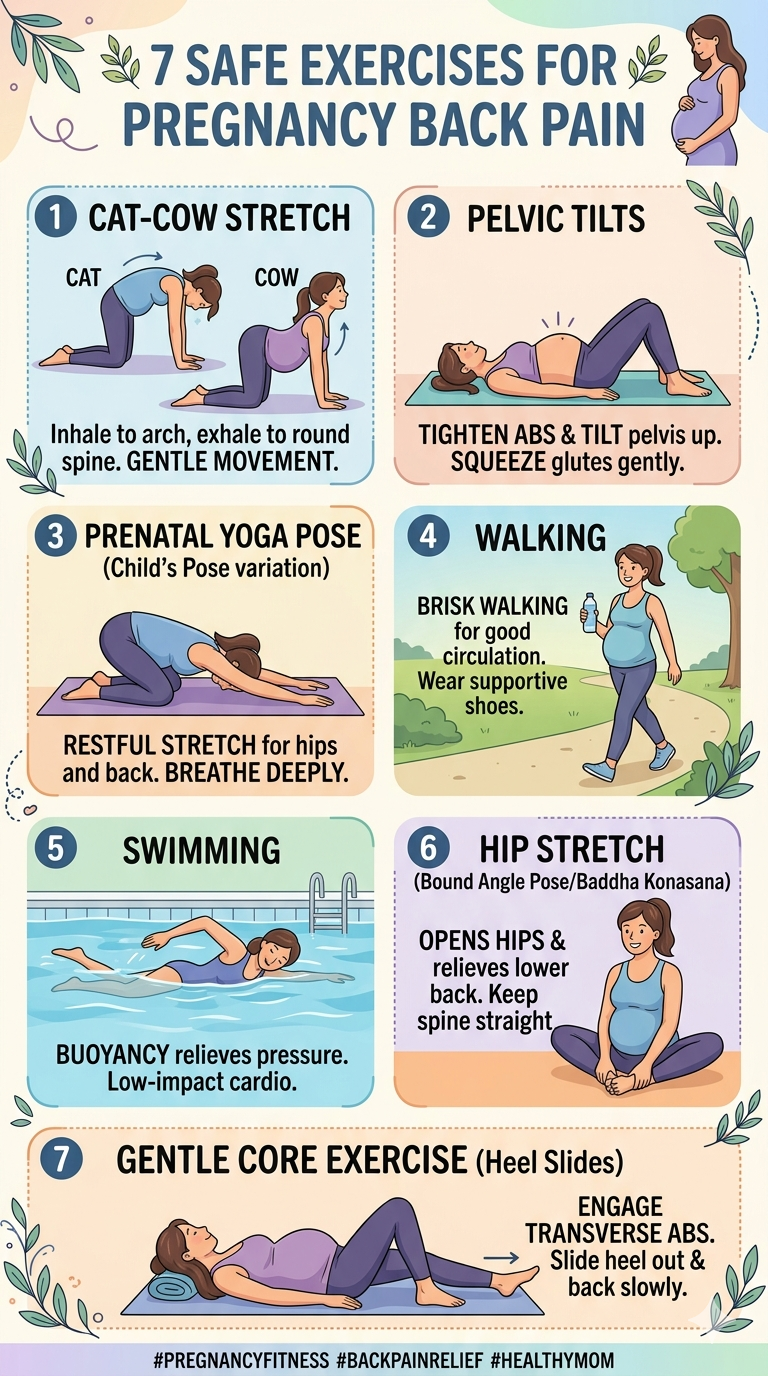
Prenatal yoga helps you build core strength and pelvic stability, which eases pressure on your lower back. Poses like cat-cow, supported child’s pose, and modified warrior strengthen the deep abdominal muscles and glutes without heavy strain.
Focused breathing and slow, controlled movement reduce muscle tension and improve circulation. You may notice less stiffness if you practice 2–3 times per week for 20–40 minutes. Use props: a folded blanket under hips, a bolster behind your back, and a strap to reach hands safely.
Avoid deep twists, full backbends, and lying flat on your back after the first trimester. Tell your instructor about any pain or pelvic pressure immediately. Choose classes labeled “prenatal” or instructors certified in prenatal care.
Low-Impact Cardio Recommendations
Low-impact cardio raises your heart rate without jarring your spine or joints. Options include brisk walking, stationary cycling, swimming, and water aerobics. Aim for 150 minutes of moderate activity per week, spread across most days.
Listen to your body: keep effort at a level where you can hold a conversation. For walking, use supportive shoes and maintain a neutral spine. For cycling, adjust the seat so knees bend slightly at the bottom of the pedal stroke.
In the pool, water supports your weight and reduces compression on vertebrae. Wear a well-fitting swimsuit and avoid diving or rapid direction changes. Stop and rest if you feel dizziness, shortness of breath, or pelvic pressure.
Stretching Routines
Stretching relieves tight hips, hamstrings, and lower back muscles that worsen pregnancy pain. Focus on gentle hip openers, hamstring lengthening, and lumbar mobility. Hold each stretch 20–30 seconds and repeat 2–3 times.
Key stretches:
- Hip flexor stretch: kneel with one knee down, tuck pelvis under, and lean forward slowly.
- Seated hamstring stretch: sit with one leg extended, hinge at hips, and reach toward your shin.
- Piriformis/glute stretch: lie on your side and pull the top knee toward your chest.
Avoid bouncing and deep passive stretches. If a stretch increases sharp pain or causes numbness, stop immediately. Use a pillow under your knees or a chair for balance when needed.
Home-Based Pain Relief Strategies
You can ease pregnancy back pain at home with simple tools and routines. Focus on safe, consistent actions that target muscle tightness, joint stress, and posture.
Heat and Cold Application
Use cold packs for new, sharp pain and heat for chronic, dull aches. Apply a cold pack wrapped in a towel for 10–15 minutes to reduce inflammation after activity. Use a heating pad or warm compress for 15–20 minutes to relax tight muscles; set heat to a comfortable, low-to-moderate level.
Avoid direct heat on your abdomen and never fall asleep with a heating pad in place. Try alternating cold and heat with at least 30 minutes between applications if one method alone does not help. Monitor skin every few minutes for redness or numbness. Stop and call your provider if pain worsens, you feel feverish, or you notice unusual swelling.
Supportive Devices
A maternity support belt can lift the belly and take pressure off your lower back. Choose a belt with wide, adjustable straps and breathable fabric; wear it during standing, walking, or chores for short periods rather than all day.
Use a pregnancy pillow or wedge while sleeping to keep hips aligned. Place a pillow between your knees when lying on your side to reduce lower back twist. Wear low-heeled, supportive shoes with arch support; avoid high heels and flip-flops. When sitting, pick a chair with good lumbar support or add a small cushion behind your lower back. Adjust car and work seats so your knees are level with your hips.
Relaxation Techniques
Practice diaphragmatic (belly) breathing to reduce muscle tension and improve posture. Sit or lie comfortably, inhale slowly through your nose so your belly rises, then exhale through your mouth; repeat for 5 minutes twice daily.
Try progressive muscle relaxation: tense one muscle group for 5–7 seconds, then relax for 10–15 seconds. Start at your feet and move up to your shoulders. Gentle guided imagery or short mindfulness sessions (5–10 minutes) can lower pain intensity and stress. Consider prenatal yoga or a relaxation app made for pregnancy; follow classes that emphasize safe positions and breathing. Stop any technique that causes dizziness, shortness of breath, or increased pain, and contact your provider.
Professional Therapeutic Interventions
You can get targeted help from trained clinicians to reduce pain and improve function. Two main options are hands-on physical therapy and careful chiropractic care, each with specific goals and limits.
Physical Therapy Guidance
A physical therapist will assess your posture, pelvic alignment, and muscle strength. Expect tests for hip range of motion, abdominal separation (diastasis recti), and gait. They will teach safe exercises like pelvic tilts, cat-cow, and modified lunges to strengthen your core and glute muscles.
Your therapist may give manual therapy to ease tight muscles and improve joint mobility. They often recommend pelvic support belts, taping for posture, and progressions for balance work. Sessions typically include home exercise plans you must follow regularly for results.
Tell your therapist about any history of preterm labor, placenta issues, or pain changes. They will adapt exercises as your pregnancy advances and after delivery. Ask for written instructions and video demos if you need help remembering techniques.
Chiropractic Considerations
A chiropractor can offer spinal alignment and joint mobilization focused on reducing nerve irritation and pelvic misalignment. They often use gentler, pregnancy-specific techniques like the Webster technique to reduce pelvic torsion and improve fetal position.
Make sure the chiropractor is trained in prenatal care. They should avoid high-force adjustments to the abdomen and use padded tables or side-lying positions. Expect soft tissue work, mobilization of sacroiliac joints, and guidance on posture and sleeping positions.
Discuss any complications with your prenatal provider before starting care. Stop treatment and contact your clinician if you get sharp pain, bleeding, or contractions after an appointment. Keep records of sessions and how your symptoms change over time.
When to Seek Medical Attention
If your back pain is severe, sudden, or getting worse quickly, contact your healthcare provider right away. Intense pain that does not improve with rest or simple self-care could signal a problem.
Seek care if pain comes with other symptoms like fever, chills, burning when you pee, or blood in your urine. These signs can mean an infection that needs treatment.
Call your provider if you have numbness, tingling, or weakness in your legs. Loss of bladder or bowel control is an emergency and requires immediate medical attention.
If you notice vaginal bleeding, fluid leakage, or strong contractions along with back pain, go to emergency services. These symptoms may indicate preterm labor.
Write down when the pain started, what makes it better or worse, and how it affects your daily life. Bring this information to appointments to help your clinician make a faster, clearer diagnosis.
If you are unsure whether to seek care, use the following checklist. If you answer yes to any item, contact your provider.
- Severe or worsening pain
- Fever, urinary symptoms, or bleeding
- Numbness, weakness, or loss of bladder/bowel control
- Signs of preterm labor (contractions, fluid loss)
Keep emergency numbers handy and do not delay when symptoms match the checklist.
Long-Term Prevention and Well-Being
Keep good posture when you sit, stand, and lift. Small changes, like tucking your pelvis and keeping your shoulders back, reduce strain on your back.
Exercise regularly to build core and pelvic strength. Aim for low-impact activities such as walking, swimming, and prenatal yoga three times a week if your provider agrees.
Maintain a healthy weight gain within guidelines from your healthcare provider. Extra weight adds stress to your spine and hips.
Use supportive gear when needed. A maternity support belt or shoes with good arch support can ease daily pressure.
Adjust your sleep setup for spine alignment. Sleep on your side with a pillow between your knees to keep your hips level and lower back relaxed.
Schedule regular prenatal check-ups and mention any persistent pain. Your provider can refer you to safe physical therapy or show tailored exercises.
Practice stress management and rest. Stress tightens muscles. Short breaks and deep breathing help reduce muscle tension.
Plan postpartum recovery for gradual return to activity. Start pelvic floor and gentle core exercises after approval from your healthcare provider.
Track what helps and what worsens pain. Keep a simple log of activities, symptoms, and relief methods to share with your care team.
Bold choices that help:
- Regular low-impact exercise
- Proper posture and lifting techniques
- Supportive footwear and belts