
You want simple, dependable ways to help your child stay healthy, and this article walks you through food choices, child-friendly supplements, and daily habits that really matter. You will learn which meals, snacks, routines, and safe supplement steps can support your child’s immune system without unnecessary fads or complicated plans.
As you read, expect clear guidance on balanced meals, age-appropriate supplements when needed, sleep and activity routines, and small lifestyle changes that add up. The goal is to give you practical options that fit family life and keep kids stronger through the seasons.
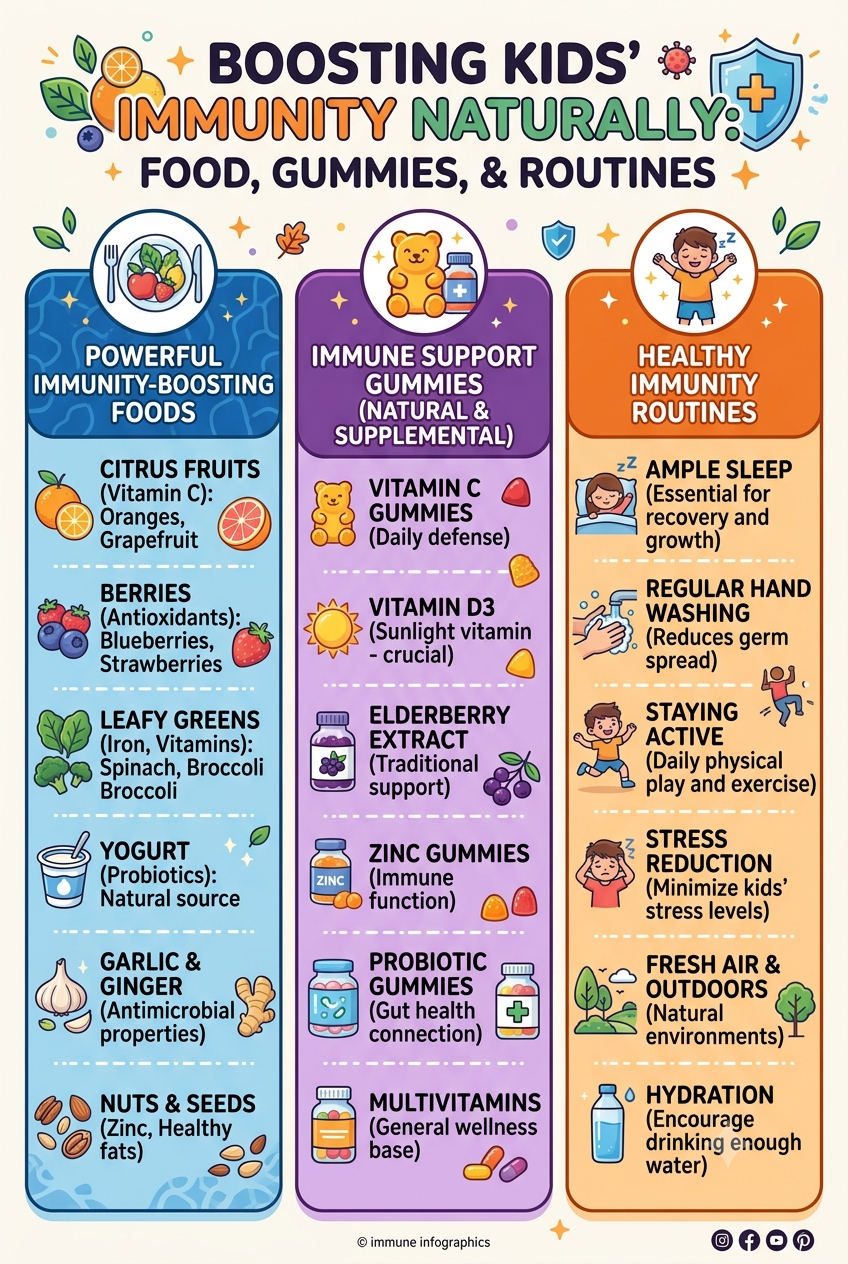
1) Serve daily servings of mixed berries (strawberries, blueberries, raspberries) for vitamin C and antioxidants
You can add a cup or two of mixed berries to your child’s daily meals to boost vitamin C and antioxidant intake. Berries supply vitamin C, fiber, and plant compounds that support general immune function without being a high-calorie treat.
Mix berries into yogurt, oatmeal, or a smoothie to make them easy to eat. Small changes like a handful with breakfast or packed in a lunchbox increase regular consumption.
Offer different types each week so your child gets a range of antioxidants. Blueberries, strawberries, and raspberries each contain unique compounds that work together to protect cells from everyday stress.
Wash berries well and check for soft spots before serving. If fresh fruit is not available, frozen berries are a safe, nutritious alternative and keep their vitamins when stored properly.
2) Include plain whole-milk yogurt with live cultures (Lactobacillus rhamnosus GG) to support gut immunity
You can add plain whole-milk yogurt that lists live cultures on the label to your child’s diet. Whole milk gives calories and fat that young kids need, and plain yogurt avoids added sugars.
Look for products that name a strain like Lactobacillus rhamnosus GG and state live cultures. That strain has research showing it can help gut balance and may support immune responses in children.
Serve about a small cup per day, mixed with fruit or a little honey for children over 1 year. If your child has a milk allergy or lactose intolerance, discuss alternatives with your clinician before offering yogurt.
Store yogurt cold and check the “live and active cultures” note or CFU information when available. Consistent daily intake matters more than occasional use for supporting gut-related immune health.
3) Offer cooked spinach and kale salads for vitamin A, C, and iron
Cooked spinach and kale supply vitamin A, vitamin C, folate, and iron, all of which support healthy blood cells and immune function. You can serve them warm or cooled as salads to make them more appealing to children.
Lightly cooking these greens lowers oxalates and can improve iron availability compared with raw leaves. Pair the salad with a vitamin C source, like orange slices or bell pepper, to help your child absorb plant-based iron.
Keep portions small and familiar at first, and mix in mild flavors such as olive oil, lemon, or a bit of grated cheese. You can also add lentils, beans, or nuts for protein and extra iron.
Avoid heavy dressings that mask the greens’ flavors and limit added salt. Rotate these salads with other vegetables so your child gets a variety of nutrients over time.
4) Add zinc-rich snacks such as roasted pumpkin seeds and low-sodium beef strips
You can add small, zinc-rich snacks to your child’s day to help support normal immune function and growth. Pumpkin seeds are a simple, vegan choice that you can roast lightly for crunch and flavor.
Low-sodium beef strips or lean jerky give a concentrated source of zinc and protein in a snack-sized portion. Choose low-salt options and cut portions to child-friendly sizes.
Pair snacks with vitamin C–rich fruit or a yogurt dip to help the body use zinc better. Keep servings moderate; too much zinc can cause stomach upset or interfere with other minerals.
If your child has dietary limits, try mixed nuts, chickpeas, or fortified cereals as alternatives. Talk with a pediatrician before using zinc supplements, especially if your child takes other vitamins.
5) Provide omega-3 sources: baked salmon twice weekly and chia-seed puddings
You can boost your child’s immune support by adding omega-3 rich foods to meals. Aim for baked salmon about twice a week if your family eats fish; it provides EPA and DHA, the forms most tied to immune and brain health.
Keep preparation simple and safe. Bake salmon at moderate temperature until opaque; avoid charring to preserve healthy fats and reduce harmful compounds.
For plant-based options, make chia-seed puddings with milk or fortified plant milk. Chia seeds supply ALA, a precursor to EPA and DHA, and also add fiber that helps gut health.
Mix ground flaxseed into yogurt or smoothies for another ALA source. If your child is vegan or allergic to fish, consider an algae-based DHA supplement after talking with your pediatrician.
Serve small portions and watch for allergies when introducing new foods. Balance these choices with a variety of fruits, vegetables, and whole grains for steady nutrient intake.
6) Morning routine: consistent 8–10 hours of age-appropriate sleep schedule
You boost your child’s immunity when they get steady, age-appropriate sleep each night. Aim for 8–10 hours for school-age kids and adjust for younger children who often need more. Regular sleep supports growth, learning, and disease resistance.
Set a fixed wake-up time and work backward to set bedtime. Count back 10 hours for most younger children and 8–10 for older kids to find the right bedtime. Consistency matters even on weekends.
Create calm wake-up and bedtime cues to keep the schedule steady. Dim lights at night and expose them to bright light in the morning to help their body clock. Limit screens before bed to improve sleep quality.
Pair the sleep plan with a predictable morning routine. A simple sequence—wake, hydrate, eat a healthy breakfast—helps your child start the day well rested. Predictable mornings reduce stress and help maintain the sleep schedule.
7) Hydration habit: offer water and diluted 100% fruit juice limited to 4–6 oz/day
You should make plain water the main drink for children throughout the day. Water keeps them hydrated without added sugars and supports digestion and energy.
For occasional fruit flavor, offer diluted 100% fruit juice. Mix one part juice with several parts water to cut the sugar and calories while keeping some vitamins.
Limit juice to 4–6 ounces (about 120–180 ml) per day for young children. Avoid giving juice in bottles or sippy cups that let them sip all day, which raises calorie intake and harms teeth.
After 12 months, milk and water are better regular choices than juice. Use juice only at meals or snacks to reduce tooth exposure and to help kids learn to enjoy plain water.
8) Physical activity routine: 60 minutes daily of outdoor play or organized sports
You should aim for at least 60 minutes of moderate-to-vigorous activity each day. Outdoor play, bike rides, swimming, or team sports all count and help build heart and lung health.
Daily movement supports immune function by improving circulation and reducing stress. Short bursts of active play, mixed with steady aerobic work, give the best mix of benefits.
Include muscle- and bone-strengthening activities two to three times weekly, like climbing, jumping, or bodyweight exercises. These activities fit naturally into games and sports.
Make activity a routine by scheduling play times, joining local classes, or setting family walks. Keep it fun and varied so kids stay motivated and consistent.
9) Limit added sugars and ultra-processed snacks to reduce immune-suppressing inflammation
Added sugars and ultra-processed snacks can raise inflammation in the body. This can make it harder for your child’s immune system to respond to infections.
Choose whole foods like fruits, vegetables, whole grains, and lean proteins instead of sweet drinks, candy, and packaged snacks. These whole foods provide vitamins, fiber, and antioxidants that support a healthy immune response.
Read labels and aim for snacks with few ingredients you recognize. Swap sugary cereals and chips for options like apple slices with nut butter, plain yogurt with berries, or roasted chickpeas.
Keep treats occasional rather than daily and serve portion-controlled amounts when you do. Small, consistent changes to what you offer will lower inflammation risk and help your child stay healthier.
10) Use pediatrician-recommended vitamin D drops (400–1000 IU based on level) after testing
Ask your pediatrician for a blood test if you worry your child may be low in vitamin D. Testing shows whether your child needs supplementing and helps set the right dose.
If levels are low, your pediatrician may recommend daily drops. Typical maintenance doses range from 400 IU for infants to about 600 IU for older children, while treatment doses can be higher — sometimes up to 1000 IU — depending on the result.
Give drops exactly as the doctor prescribes and use a product made for children. Vitamin D is fat-soluble, so give it with a meal that includes some fat to improve absorption.
Avoid giving extra vitamin D without medical advice. Too much can cause harm, so follow testing, dosing, and follow-up plans your pediatrician sets.
Understanding the Science Behind Immunity in Children
Children build immune defenses through exposure, nutrition, sleep, and care. You will learn how immune cells form and which everyday factors help or hinder immune strength.
How the Immune System Develops
Your child’s immune system starts developing before birth and keeps maturing through early childhood. Innate immunity — physical barriers like skin and cells such as neutrophils — provides the first rapid defense. Adaptive immunity, driven by B and T cells, learns specific germs after exposure or vaccination and improves with repeat encounters.
Exposure to common microbes in daycare or playgrounds trains adaptive immunity and lowers allergy risk over time. Vaccines stimulate safe, targeted memory without causing disease. Gut microbes shape immune cell behavior, so diet and early antibiotic use can change immune development. Growth, hormones, and age also shift immune responses; infants rely more on maternal antibodies at first, then build their own protection.
Factors That Influence Immune Health
Several clear, modifiable factors change how well your child fights infection.
- Nutrition: Protein, vitamin C, vitamin D, zinc, and fiber support immune cell production and gut microbiome balance.
- Sleep: School-age children need about 9–11 hours; poor sleep reduces immune signaling and raises infection risk.
- Physical activity: Daily active play improves circulation and immune surveillance.
- Microbial exposure: Balanced exposure to everyday microbes helps train the immune system; excessive sterilization may limit that training.
- Vaccination and medical history: Up-to-date vaccines and avoiding unnecessary antibiotics preserve protective memory and healthy microbiota.
- Stress and mental health: Chronic stress or anxiety in children can weaken immune responses through hormonal pathways.
You can focus on these areas to support measurable immune functions like antibody production, inflammation control, and recovery speed.
Integrating Holistic Wellness Practices
Focus on steady sleep, daily movement, and emotional support. Small, consistent habits—like set bedtimes, outdoor play, and calming check-ins—have the biggest impact on a child’s immune readiness.
The Role of Consistent Sleep Schedules
Set a fixed bedtime and wake time for school days and weekends. Aim for the age-based ranges: 9–12 hours for school-age kids and 8–10 hours for teens. Consistency helps regulate hormones that affect infection defense.
Create a simple wind-down routine: dim lights, quiet play or reading, and screens off 60 minutes before bed. Keep the bedroom cool, dark, and tech-free. If your child resists bedtime, offer a short soothing ritual—five minutes of reading or gentle stretches—to signal sleep time.
Track sleep with a short weekly log: bedtime, wake time, and wake-night wake-ups. Share the log with caregivers so everyone follows the same schedule. Small changes, like moving lights earlier by 15 minutes, can improve total sleep over a week.
Balancing Screen Time and Physical Activity
Limit recreational screen time to about 1–2 hours daily for school-age children. Prioritize active play, especially outdoor play, for at least 60 minutes every day to support circulation and immune function.
Swap passive screen time for specific activities: bike rides, backyard games, organized sports, or nature walks. Use a visual schedule or checklist to show daily goals (e.g., 30 minutes outdoor play, 20 minutes free play, 10 minutes family activity).
Encourage screen-free meals and a tech-free hour before bed. When screens are used, choose active options—dance videos or family yoga—to keep movement in the routine. Make physical activity predictable: same time each day helps it become a habit.
Supporting Emotional Wellbeing
Check in with your child daily about feelings. Short, open questions—“What went well today?” or “What was hard?”—let you spot stress that can affect sleep and appetite.
Teach simple breathing and grounding exercises: 4-count inhale, 4-count hold, 4-count exhale, done three times. Practice these together before bedtime or when mood shifts. Model calm responses; children copy how you handle stress.
Build social connection through routines: family meals, one-on-one time, and playdates. If worries persist—changes in sleep, appetite, or mood for more than two weeks—consult a pediatrician or school counselor for guidance.