
You want simple, reliable ways to support your immune routine with essential oils. This article shows practical diffuser and roller blends plus easy recipes so you can choose safe, useful options for daily defense and when you feel run down.
You will find blends for general immunity, respiratory relief, and recovery, and clear guidance on how to use them safely. Expect step-by-step recipes, pairing ideas, and brief notes on why certain oils work well together so you can make confident choices for your home and personal care.
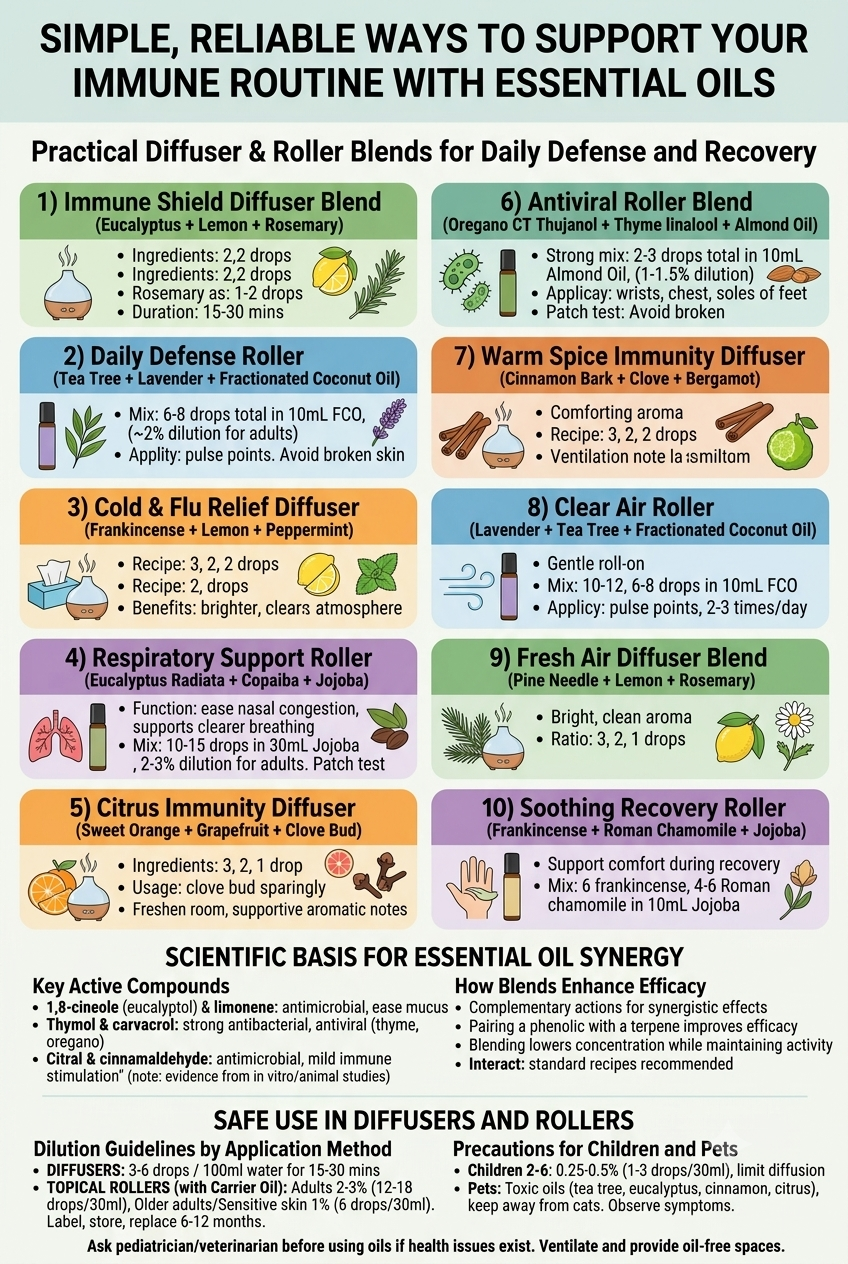
1) Immune Shield Diffuser Blend (Eucalyptus + Lemon + Rosemary)
You can diffuse this blend to freshen the air and create a bright, herbal scent. Eucalyptus brings a clean, camphor-like note that many people find clarifying.
Lemon adds a crisp citrus top note that lifts the aroma and feels refreshing. Rosemary gives a warm, slightly woody herbal depth that balances the blend.
Start with 2 drops eucalyptus, 2 drops lemon, and 1–2 drops rosemary in a standard water-based diffuser. Run the diffuser for 15–30 minutes at a time, and open a window if you or others feel sensitive to strong scents.
If you have asthma, are pregnant, or care for infants, consult a healthcare provider before using essential oils. Keep oils out of reach of children and pets, and follow diffuser manufacturer guidelines.
2) Daily Defense Roller (Tea Tree + Lavender + Fractionated Coconut Oil)
You can make a simple Daily Defense roller using tea tree, lavender, and fractionated coconut oil as the carrier. This blend combines a fresh, herbal note from tea tree with the soft floral tone of lavender for a balanced, everyday scent.
Use a 10 mL glass roller bottle and dilute to about a 2% total essential oil concentration for adults. That usually means around 6–8 drops of essential oil total, filled up with fractionated coconut oil to the shoulder of the bottle.
Apply to pulse points such as the wrists or behind the ears for brief inhalation during the day. Avoid broken skin and keep the bottle away from eyes and sensitive areas.
Store the roller in a cool, dark place and label it with the date you made it. If you notice skin irritation, stop use and consult a healthcare professional.
3) Cold & Flu Relief Diffuser (Frankincense + Lemon + Peppermint)
You can use frankincense, lemon, and peppermint together to create a bright, clearing diffuser blend. Frankincense adds a warm, grounding scent, lemon brings a clean, uplifting note, and peppermint gives a cool, refreshing touch.
Add 3 drops frankincense, 2 drops lemon, and 2 drops peppermint to your diffuser reservoir. Run the diffuser for 30–60 minutes in a well-ventilated room, and avoid continuous all-day diffusion.
Keep oils away from children, pets, and anyone with sensitivity to strong scents. Do not apply undiluted oils to skin or near eyes. If you are pregnant, nursing, or have a medical condition, consult a healthcare professional before use.
This blend supports a clearer-feeling room atmosphere and may help you feel more alert while recovering. Use it as part of general self-care during cold and flu season, along with rest, fluids, and medical advice when needed.
4) Respiratory Support Roller (Eucalyptus Radiata + Copaiba + Jojoba)
You can use this roller to ease mild nasal congestion and support clearer breathing during colds or allergy season. Eucalyptus radiata offers a fresh, cooling scent that many find helps open the airways when inhaled gently from the skin.
Copaiba acts as a gentle carrier oil and adds a warm, woody note. It dilutes the blend and helps reduce skin sensitivity compared with using eucalyptus alone.
Jojoba serves as the primary carrier for safe topical use and helps the roller glide smoothly over the chest, throat, or temples. Apply a small amount to the chest and inhale slowly; do not apply near the eyes or on broken skin.
Start with a dilution of about 2–3% for adults (roughly 10–15 drops of essential oil per 30 ml jojoba). Test a small skin patch first and stop use if irritation occurs.
5) Citrus Immunity Diffuser (Sweet Orange + Grapefruit + Clove Bud)
You can use this blend to freshen a room while adding supportive aromatic notes. Sweet orange and grapefruit give a bright, uplifting scent that many find pleasant and energizing.
Add clove bud sparingly to introduce a warm, spicy note and mild antimicrobial aroma. Start with a ratio of 3 drops sweet orange, 2 drops grapefruit, and 1 drop clove bud in your diffuser, then adjust to your preference.
Diffuse for 30–60 minutes at a time, especially in shared spaces or during cold season. Keep windows open sometimes for air exchange, and avoid continuous all-day diffusion.
If you have children, pets, or respiratory issues, check safety guidance first and reduce clove bud or skip it. Store oils properly and stop use if you notice irritation or discomfort.
6) Antiviral Roller Blend (Oregano CT Thujanol + Thyme linalool + Almond Oil)
You can make a focused antiviral roller using oregano CT thujanol and thyme linalool diluted in sweet almond oil. Use a 10 mL roller bottle and add 2–3 drops total of essential oils for a gentle 1–1.5% dilution, then fill the rest with almond oil as the carrier.
Apply the roller to your wrists, chest, or the soles of your feet for topical support during times of increased exposure. Do a small patch test first to check for skin sensitivity, especially with oregano which can be strong.
Store the roller in a cool, dark place and label it with the oils and dilution date. If you are pregnant, nursing, or have a medical condition, consult a healthcare professional before use.
7) Warm Spice Immunity Diffuser (Cinnamon Bark + Clove + Bergamot)
You can use this blend to create a warm, spicy aroma that feels comforting during cold season. Cinnamon bark and clove add a rich, warming base while bergamot brings a bright, citrus top note to balance the mix.
Start with 3 drops cinnamon bark, 2 drops clove, and 2 drops bergamot in your diffuser. Run the diffuser for 20–30 minutes at a time and keep sessions to a few times per day to avoid irritation.
If you or anyone in your household has sensitive skin, asthma, or is pregnant, consult a healthcare provider before regular use. Always ensure good ventilation and avoid direct skin contact with undiluted oils.
Store oils out of sunlight and keep them tightly closed. Replace the blend if the scent changes, and label homemade mixtures with the date you made them.
8) Clear Air Roller (Lavender + Tea Tree + Fractionated Coconut Oil)
You can use the Clear Air Roller when you want a gentle, refreshing roll-on for your neck, chest, or wrists. Lavender adds a calming scent while tea tree contributes a clean, slightly medicinal aroma that many people find clearing.
Mix about 10–12 drops of lavender and 6–8 drops of tea tree into a 10 ml roller bottle. Fill the rest with fractionated coconut oil as the carrier to dilute the oils safely for topical use.
Apply a small amount to your pulse points two to three times a day as needed. Avoid broken skin, and test a small area first to check for sensitivity.
Store the roller in a cool, dark place away from direct sunlight. Keep it out of reach of children and pets, and stop use if irritation occurs.
9) Fresh Air Diffuser Blend (Pine Needle + Lemon + Rosemary)
You will enjoy a bright, clean aroma with this blend. Pine needle offers a crisp, forest scent that feels grounding.
Lemon adds a clear, citrus note that lifts the mood and cuts through stale air. Rosemary brings a herbaceous, slightly camphorous tone that pairs well with both pine and lemon.
Start with a diffuser ratio of 3 drops pine needle, 2 drops lemon, and 1 drop rosemary for a medium room. Adjust by adding one drop at a time until the scent suits your space.
Keep diffuser sessions to 30–60 minutes if you or others in the room have sensitivities. Always follow diffuser and oil safety guidelines, and avoid direct skin contact with undiluted oils.
10) Soothing Recovery Roller (Frankincense + Roman Chamomile + Jojoba)
You can make a gentle roller to support comfort during recovery using frankincense, Roman chamomile, and jojoba oil. Frankincense adds a warm, grounding aroma while Roman chamomile brings a mild, calming scent that many find soothing.
Use a 10 ml roller bottle and fill it about 90% with jojoba as the carrier oil. Add a total of 10–12 drops of essential oil: 6 drops frankincense and 4–6 drops Roman chamomile, depending on scent strength and skin sensitivity.
Apply the roller to your chest, wrists, or the base of the throat as needed. Do a patch test first to check for skin reactions, and avoid using on broken skin or near the eyes.
Store the roller in a cool, dark place and label it with ingredients and date. Replace within 6–12 months for best quality and discard if the scent or color changes.
Scientific Basis for Essential Oil Synergy
You will learn which chemical ingredients drive immune effects and how combining oils can change their action. The points focus on specific molecules, measured effects, and practical blending outcomes.
Key Active Compounds in Immunity Support
Several molecules in essential oils show consistent antimicrobial or immune-modulating activity in lab studies. Terpenes such as 1,8-cineole (eucalyptol) and limonene reduce respiratory pathogens and ease mucus. Phenolics like thymol and carvacrol (found in thyme and oregano) have strong antibacterial and antiviral activity at low concentrations. Aldehydes such as citral and cinnamaldehyde show both antimicrobial effects and mild immune stimulation in cell studies.
You should note that most evidence comes from in vitro experiments and animal models. Human clinical trials are limited, so you must avoid assuming identical effects in people. Pay attention to concentration — many active compounds are effective only within specific, often low, dose ranges that are safe for topical or inhalation use.
How Blends Enhance Efficacy
Blends can change outcomes by combining complementary actions: one oil may disrupt a microbe’s cell wall while another blocks its replication or reduces inflammation. This can produce additive or synergistic effects, meaning the combined effect equals or exceeds the sum of each oil alone. For example, pairing a phenolic (strong antimicrobial) with a terpene (good vapor-phase activity) often improves both surface and inhalation efficacy.
Blending also lets you lower each oil’s concentration, reducing skin or airway irritation while maintaining activity. You should test small ratios and follow safety limits. Interactions matter: some compounds compete for the same biological target, which can reduce effectiveness. Use standardized recipes or evidence-based ratios when possible to maximize benefit and minimize risk.
Safe Use in Diffusers and Rollers
Use measured dilutions, limit diffusion time, and check for sensitivity before regular use. Keep oils away from children’s hands and avoid diffusing near pets or in small, unventilated spaces.
Dilution Guidelines by Application Method
For diffusers, add 3–6 drops of essential oil per 100 ml of water for a typical room (10–20 m²). Start at the low end and run the diffuser for 15–30 minutes, then pause at least 30–60 minutes before repeating. This reduces irritation and avoids overwhelming scents.
For topical rollers, use a carrier oil such as fractionated coconut oil or almond oil. Common dilutions:
- Adults: 2–3% (12–18 drops per 30 ml/1 oz carrier).
- Older adults or sensitive skin: 1% (6 drops per 30 ml). Apply to wrists, chest, or behind the ears. Do a patch test on forearm for 24 hours first.
Label each bottle with oil names, dilution, and date. Store rollers in a cool, dark place. Replace blends within 6–12 months or sooner if scent changes.
Precautions for Children and Pets
Do not use strong oils near babies or young children. For children ages 2–6, use 0.25–0.5% topical dilutions (1–3 drops per 30 ml) and limit diffusion to short periods while supervised. Avoid diffusing directly in nurseries or letting children handle essential oil bottles.
Many oils are toxic to pets. Avoid diffusing tea tree, eucalyptus, cinnamon, citrus in rooms where cats spend most time. Keep rollers off pet fur and skin. If your pet shows coughing, drooling, lethargy, or changes in appetite, stop use and contact a veterinarian.
Ask your pediatrician or veterinarian before using oils if the child or pet has asthma, seizures, or other health issues. Always ventilate the room well and offer an oil-free space for anyone who needs a break.