
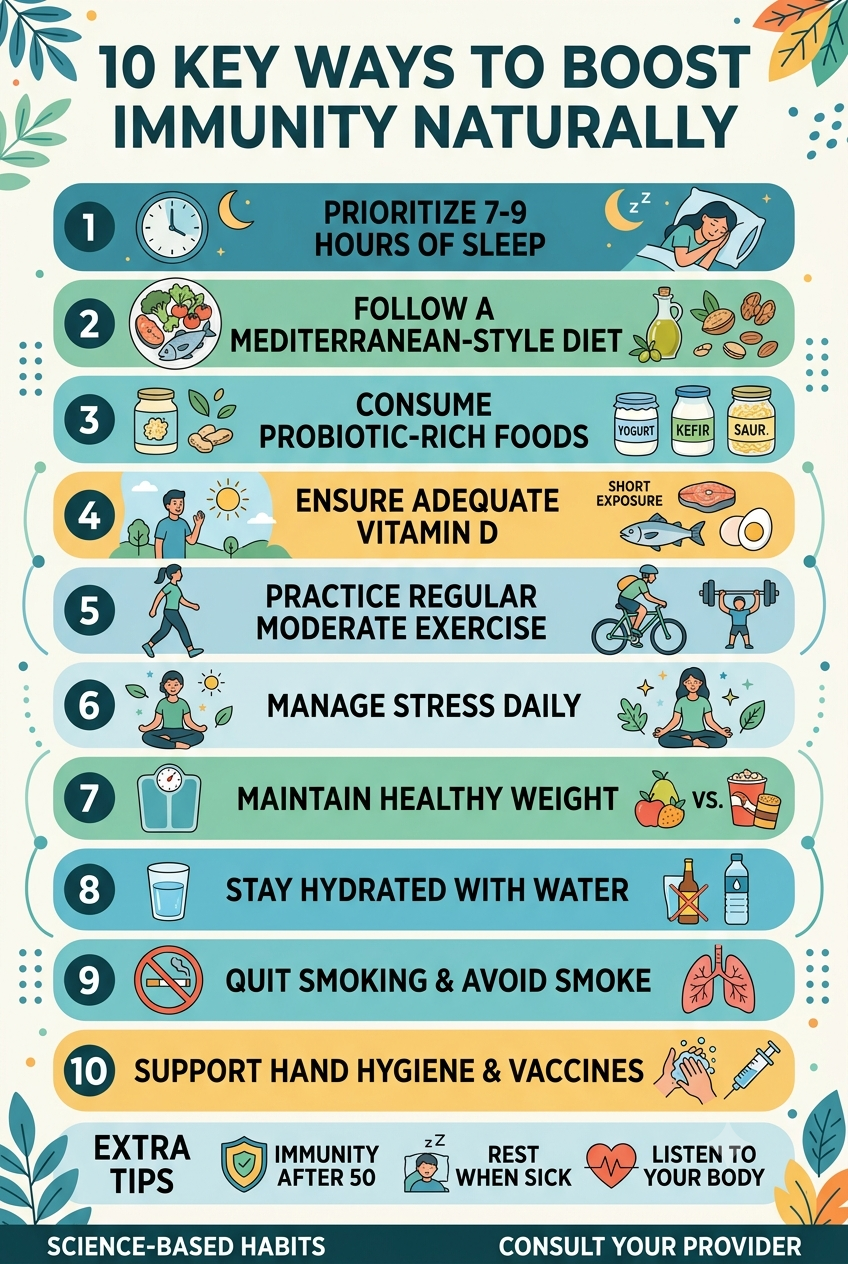
You can take practical steps to help your body resist infections and stay healthier day to day. Simple lifestyle choices—sleep, diet, movement, stress control, and avoiding harmful habits—work together to strengthen your immune system naturally.
This article will guide you through science-based habits and small hacks you can adopt now to support immunity across life stages. Expect clear advice on sleep, food patterns, gut health, vitamin D, exercise, weight, hydration, stress tools, quitting smoking, hygiene, and vaccines.
1) Prioritize 7–9 hours of nightly sleep
You should aim for 7–9 hours of sleep each night to support your immune system. Research shows this range helps your body repair cells and produce immune proteins.
Keep a regular sleep schedule by going to bed and waking up at the same times every day. Consistency trains your body clock and improves sleep quality.
Create a calm sleep environment. Make your bedroom cool, dark, and quiet, and use the bed only for sleep to strengthen the sleep habit.
Limit screens and bright light in the hour before bed. Reducing blue light helps your body make melatonin so you fall asleep more easily.
Manage stress with short relaxation routines like deep breathing or gentle stretching. Lower stress levels often lead to fewer night wakings and better overall rest.
2) Follow a Mediterranean-style diet rich in vegetables, fruits, whole grains, legumes, nuts, olive oil
You should base most meals on vegetables, fruits, whole grains, legumes, and nuts. These foods supply fiber, vitamins, minerals, and plant compounds that support immune functions.
Choose extra virgin olive oil as your main fat. Olive oil provides healthy monounsaturated fats and antioxidants that reduce inflammation linked to weaker immunity.
Include fish and seafood a few times weekly for omega-3 fats and vitamin D. If you prefer less meat, legumes, eggs, and dairy like yogurt or cheese offer protein and key nutrients.
Limit processed foods, added sugars, and excess red meat. These items can promote inflammation and may blunt some immune responses when eaten often.
Make small, steady changes you can keep. Swap refined grains for whole grains, add a serving of vegetables to each meal, and snack on nuts or fruit instead of sweets.
3) Consume probiotic-rich foods: yogurt, kefir, sauerkraut, kimchi
You can boost gut health by eating foods that contain live probiotic bacteria. Yogurt and kefir are good choices because they often list “live and active cultures” on the label.
Fermented vegetables like sauerkraut and kimchi also supply microbes that help balance your gut community. These foods add variety to your diet and may support digestion and nutrient absorption.
Include probiotic foods regularly, but start slowly to let your system adjust. If you have a weakened immune system or take immune-suppressing medication, check with your clinician before adding raw fermented products.
Not all fermented foods contain live probiotics; canned or pasteurized versions may lack live cultures. Look for fresh, refrigerated options or labels that state live cultures to get the probiotic benefit.
4) Ensure adequate vitamin D through safe sun exposure and, if needed, supplementation (consult provider)
You make vitamin D when ultraviolet B (UVB) rays hit bare skin. Short, regular sun exposure to arms and legs can raise levels without long tanning sessions.
How much sun you need depends on where you live, skin tone, time of day, and season. Cloud cover, clothing, and sunscreen also affect production.
If you cannot get enough sun, choose vitamin D–rich foods like oily fish, fortified milk, and eggs. These help, but many people still need supplements to reach adequate levels.
Have your blood checked before starting supplements to know your baseline. Your health provider can recommend a safe dose and schedule based on your results and medical history.
5) Practice regular moderate exercise: 150 minutes/week of brisk walking or equivalent
You should aim for about 150 minutes of moderate aerobic activity each week, such as brisk walking. You can break this into 30 minutes on five days, or shorter sessions that add up.
Moderate exercise raises your heart rate and helps immune cells move more easily through your body. This can support immune surveillance without causing the stress that intense exercise can when overdone.
Include muscle-strengthening activities at least two days a week in addition to aerobic work. Strength training supports overall health and helps you stay active as you age.
Balance rest and activity. Avoid sudden large increases in intensity or duration to reduce the risk of injury and temporary immune suppression.
If you have health conditions, talk with your healthcare provider before starting a new exercise plan. Tailor activity to your fitness level and progress gradually.
6) Manage stress with daily mindfulness meditation or progressive muscle relaxation
Stress weakens your immune response over time. Daily mindfulness meditation or progressive muscle relaxation (PMR) lowers stress hormones and helps your body recover.
Start with short sessions of 5–10 minutes and build toward 20 minutes a day. For mindfulness, focus on your breath and gently return your attention when it wanders.
For PMR, tense each muscle group for a few seconds, then release and notice the difference. Work from your feet up to your face, or vice versa, to cover the whole body.
Practice at a regular time, such as morning or before bed, to make it a habit. Even brief, consistent practice improves sleep, mood, and your ability to handle future stressors.
If you have health issues, check with a clinician before starting new practices. Use guided recordings or apps at first if you need structure.
7) Maintain healthy body weight and limit added sugars and ultra-processed foods
Keeping your body weight in a healthy range helps your immune system work better. Excess weight can increase inflammation and make it harder for your body to fight infections.
Cut back on foods with added sugars and ultra-processed ingredients. These products often lack nutrients your immune cells need and can raise inflammation when eaten a lot.
Choose whole foods like vegetables, fruits, whole grains, lean proteins, nuts, and legumes. These provide vitamins, minerals, fiber, and healthy fats that support immune function and overall health.
Watch portion sizes and limit sugary drinks, candy, fast food, and packaged snacks. Small changes, like swapping soda for water or fruit, make a big difference over time.
If you need guidance, talk with a registered dietitian or your healthcare provider. They can help you set realistic goals and find practical swaps that fit your tastes and budget.
8) Stay hydrated with plain water and limit excessive alcohol intake
You should aim to drink plain water throughout the day to support digestion, circulation, and temperature control. Proper hydration helps mucus membranes work well, which can reduce the chance of infections.
Avoid relying on sugary drinks for hydration; they add calories and can harm immune health over time. Water is the simplest choice and usually meets your needs if you drink regularly.
Keep alcohol intake low because heavy drinking impairs immune responses and raises infection risk. Small, occasional drinks are less likely to cause harm, but regular excessive use weakens your defenses.
If you exercise, live in a hot climate, or are ill, increase fluid intake to replace losses. Watch for signs of dehydration like dark urine, dry mouth, or lightheadedness and respond by drinking water.
9) Quit smoking and avoid secondhand smoke exposure
You weaken your immune defenses when you smoke. Tobacco smoke damages cells in your airways and lowers the ability of your lungs to clear infections.
Quit smoking to let your body begin to repair itself. Many health benefits start within days, and the longer you stay smoke-free, the better your immune response and lung function become.
Secondhand smoke also harms your immune system and increases infection risk. Do not let others smoke in your home or car, and support smoke-free spaces where you live and work.
Seek help to quit if you need it. Use counseling, approved medications, or local quit programs; combining support raises your chances of success.
10) Support hand hygiene and seasonal vaccinations (influenza, COVID-19 as recommended)
You should wash your hands often with soap and water for at least 20 seconds, especially after being in public, before eating, and after coughing or sneezing. If soap and water are not available, use a hand sanitizer with at least 60% alcohol.
Keep fingernails short and clean to reduce places for germs to hide. Avoid touching your face with unwashed hands to lower the chance of introducing viruses to your mouth, nose, or eyes.
Stay up to date on seasonal vaccines such as influenza and COVID-19 when health authorities recommend them for you. Vaccines reduce your risk of getting sick and help prevent serious complications in many people.
Combine hygiene and vaccination with other healthy habits like sleep, good nutrition, and avoiding close contact with sick people. These layered steps work together to lower your overall risk from respiratory illnesses.
The Science Behind Immunity
Your body defends against germs using layered responses and specific cells. Nutrition, sleep, stress, and age all change how those defenses work.
How the Immune System Functions
Your immune system uses two main strategies: innate and adaptive responses. The innate response acts first and fast. It includes physical barriers like skin and mucous, plus cells such as neutrophils and macrophages that swallow and destroy invaders.
If pathogens bypass the innate layer, the adaptive response starts. B cells make antibodies that lock onto specific germs. T cells either kill infected cells or help other immune cells coordinate. Adaptive immunity remembers past infections, so you respond faster on repeat exposure.
Inflammation signals and chemical messengers called cytokines coordinate these steps. Too much inflammation or weak signaling can reduce your ability to clear infections. Balanced responses matter for both fighting germs and avoiding tissue damage.
Key Immune System Components
Cells: neutrophils, macrophages, dendritic cells, B cells, T cells, natural killer (NK) cells. Each has a clear job—patrol, present antigens, produce antibodies, or kill infected cells.
Organs: bone marrow makes blood and immune cells. Thymus trains T cells. Spleen filters blood and removes old cells. Lymph nodes trap pathogens and let immune cells meet.
Molecules: antibodies tag invaders for destruction. Complement proteins punch holes in microbes. Cytokines send on/off and directional signals between cells.
You depend on these parts to work together. Shortages in nutrients, poor sleep, or chronic stress can lower cell counts, slow antibody production, or alter cytokine balance—making infections more likely or recovery slower.
Lifestyle Factors That Influence Immunity
Chronic stress and poor sleep change how your body fights infections. Small daily choices in how you rest and cope with pressure shape your immune responses and recovery times.
Impact of Chronic Stress
When you face long-term stress, your body keeps releasing stress hormones like cortisol. High cortisol over weeks or months lowers white blood cell activity and reduces the effectiveness of immune signaling molecules.
You may notice more frequent colds, slower wound healing, or flare-ups of chronic conditions. Managing stress through focused actions—regular brisk walks, timed breathing exercises, social support, and setting clear work boundaries—reduces cortisol spikes.
Practical steps you can take include scheduling short breaks during work, practicing 5–10 minutes of deep breathing twice daily, and keeping a simple gratitude or mood log. These moves lower daily stress load and help restore normal immune function over time.
Effects of Sleep Quality
Poor sleep weakens immune memory and reduces production of protective proteins called cytokines. Even a few nights of short sleep can cut your vaccine response and increase infection risk.
Aim for consistent sleep timing, 7–9 hours per night, and a dark, cool bedroom to support deep sleep stages. Avoid screens for 60 minutes before bed and limit caffeine after mid-afternoon.
If you have trouble falling or staying asleep, use a brief pre-sleep routine: dim lights, a 10-minute relaxation practice, and a written to-do list to clear your mind. These habits boost sleep quality and help your immune system recover and build defenses.
Immunity after 50
Your immune system changes as you age. Cells that fight infection slow down and respond less strongly, so you may get sick more often and take longer to recover.
Focus on habits that support immune function. Eat a varied diet with protein, fruits, vegetables, and healthy fats. Aim for foods rich in vitamin C, vitamin D, zinc, and protein to help repair tissues and support immune cells.
Stay active with regular moderate exercise. Brisk walking, swimming, or cycling most days helps circulation and immune surveillance. Avoid prolonged heavy training without recovery, which can weaken immune responses.
Prioritize sleep and stress management. Aim for 7–9 hours of sleep and use simple stress tools like deep breathing, short walks, or social time. Chronic stress and poor sleep reduce immune cell effectiveness.
Keep vaccinations up to date and talk to your clinician about boosters and flu shots. Preventive care lowers your risk of severe illness and supports overall immune protection.
Monitor medications and chronic conditions. Manage diabetes, heart disease, and other long-term conditions with your healthcare team. Some medicines and untreated conditions can impair immunity.
Consider safe supplements when needed. If you have low vitamin D or other deficiencies, a clinician can recommend testing and appropriate doses. Avoid high-dose supplements unless directed by a professional.
5 Immunity Exercises
Regular movement helps your immune system work better by improving circulation and reducing inflammation. Aim for moderate activity most days rather than intense bursts that leave you exhausted.
- Brisk walking: Walk 30–60 minutes at a pace that raises your breathing but still lets you talk. This low-risk exercise supports circulation and mood.
- Cycling or swimming: Choose 30–60 minutes of steady-paced cycling or swimming a few times a week. These activities strengthen lungs and heart without heavy joint strain.
- Strength training: Do 2 sessions per week of light to moderate resistance work (bodyweight, bands, or weights). Muscle helps metabolism and supports overall health.
- Yoga or tai chi: Practice 20–40 minutes of gentle flow or balance work to reduce stress and improve sleep. Calm breathing in these practices also aids immune regulation.
- Interval walking or light jogging: Add short bursts of higher effort (1–2 minutes) within a 30–40 minute session. Keep intensity moderate and recovery complete to avoid overtraining.
Follow these safety tips:
- Rest when sick or overly tired; short pauses help recovery.
- Hydrate and fuel before and after sessions.
- Listen to your body; adjust intensity if you feel prolonged soreness or fatigue.
Combine these exercises with good sleep, balanced nutrition, and stress management for the best immune support.