
Finding the best wearable sleep tracker today is not as simple as picking the one with the most features. Sleep affects everything from your immune system to your mood, your weight, and your productivity. Therefore, tracking it accurately gives you real power to improve your health. In this guide, we review five of the most accurate sleep trackers available right now, rank them from best to fifth, and share real two-person experiences after using each one.
Whether you are looking for the best sleep tracker 2026, trying to understand how accurate sleep trackers are, or simply want the highest-rated sleep tracker device for your lifestyle, this article has you covered. We cover smartbands, rings, and strap-style trackers so you can find the right fit.
How We Ranked These Sleep Trackers
Before we dive in, here is how we chose our rankings. We looked at sleep monitoring depth, heart rate accuracy, battery life, comfort during sleep, app quality, subscription costs, and overall value. We also gathered feedback from two real users who tested each device for at least two weeks.
These are not the cheapest devices on the market. However, they represent the most accurate sleep monitoring devices you can buy today. Also, we considered whether each product works well for both men and women, because sleep health is universal.
The 5 Best Wearable Sleep Trackers Ranked
#1 Oura Ring 4 (Silver) — Best Overall Sleep Tracker

Key Features: Sleep staging, heart rate variability, body temperature, readiness score, women’s health tracking, AI advisor, up to 8 days of battery life, Android and iOS compatible.
Price Range: Mid-to-high range with a monthly subscription fee.
The Oura Ring 4 is our pick for the best wearable sleep tracker overall, and it is easy to see why. It packs an extraordinary amount of health data into a small, stylish ring. Because it sits on your finger all night, it picks up subtle biological signals that wristbands often miss. The result is some of the most accurate sleep tracking data you can get from a consumer device.
The ring measures your heart rate, heart rate variability (HRV), skin temperature, blood oxygen levels, and movement throughout the night. It then uses all of this data to give you a detailed sleep score each morning. You get a breakdown of light sleep, deep sleep, and REM sleep stages, along with how long it took you to fall asleep and how often you woke up.
The new AI Advisor feature is a genuine highlight. It interprets your data and gives you plain-language suggestions. For example, it might tell you that your deep sleep dropped because your resting heart rate was elevated, possibly due to stress or a late meal. This kind of insight turns raw data into action.
The readiness score is another standout. Each morning, Oura tells you how recovered your body is and whether you should push hard or take it easy. This is especially useful for athletes and people with demanding schedules.
Women’s health tracking is thoughtful and thorough. The ring tracks menstrual cycle phases and adjusts its baselines accordingly, which is something very few devices do well.
Battery life reaches up to 8 days, so you rarely need to charge it during the week.
The one catch: Oura charges a monthly membership fee to access full insights. The hardware cost is also significant upfront. However, for those who want the most accurate sleep monitoring device on the market, the investment is worth it.
User Experiences:
Amelia, 34, a yoga instructor, said: “I was sceptical about a ring tracking my sleep. After two weeks, I was genuinely impressed. It told me my REM sleep was low on nights I had wine with dinner, and that matched how I felt in the morning. It does not feel like wearing anything at all.”
James, 41, a marketing manager, added: “The readiness score changed how I plan my workday. When it says I am at 60%, I schedule lighter tasks. My performance and mood have both improved since I started listening to it.”
Verdict: The Oura Ring 4 is the best sleep tracker for people who want the deepest, most actionable sleep data in the most comfortable form factor.
#2 WHOOP 5.0 with MG Activity Tracker — Best for Serious Athletes

Key Features: 24/7 activity and sleep tracking, personalized coaching, menstrual cycle insights, 14-plus days of battery life, no screen, 12-month membership included, medical-grade sensors.
Price Range: High (membership model, no upfront device cost after the plan).
The WHOOP 5.0 is a different kind of wearable. It has no screen, no notifications, and no distractions. Its only job is to collect data and help you perform better. That singular focus makes it one of the most accurate sleep trackers on the market today.
WHOOP tracks your sleep in remarkable detail. It monitors sleep cycles, respiratory rate, HRV, and blood oxygen. It also measures your strain each day and uses that to calculate how much recovery sleep you actually need. This is called the Sleep Coach feature, and it tells you a specific bedtime based on your goals and how hard you pushed that day.
The WHOOP 5.0 is a step up from its predecessor with improved sensors described as medical-grade, which puts it among the highest-rated sleep tracker devices in terms of raw measurement quality. It also introduces health span features that estimate your biological age and track long-term wellness trends.
Battery life is exceptional at 14-plus days. Even better, you charge it with a slide-on battery pack while wearing it, so you never miss a night of data.
Menstrual cycle insights are integrated directly into the coaching system, helping women understand how their cycle affects sleep quality, recovery, and performance.
The lack of a screen is actually a feature, not a flaw. Because there are no alerts or notifications, WHOOP encourages you to check in with your body rather than your phone.
The downside: The membership model means you pay ongoing costs. There is no one-time purchase option. Also, without a screen, you cannot glance at the time or see step counts on the fly.
User Experiences:
Brad, 29, a marathon runner, said: “WHOOP showed me I was chronically under-sleeping before races. I thought seven hours was fine. The data showed I needed closer to nine hours given my training load. My race times improved after I started listening to it.”
Faith, 36, a nurse, said: “I work night shifts, and WHOOP helped me understand how badly shift work affects my sleep quality. The coaching felt personal, not generic. It actually adjusts for my irregular schedule.”
Verdict: WHOOP 5.0 is the best wearable sleep tracker for athletes, shift workers, and anyone serious about optimising recovery. It is one of the most accurate sleep trackers for deep physiological insight.
#3 Fitbit Inspire 3 — Best Budget-Friendly Sleep Tracker
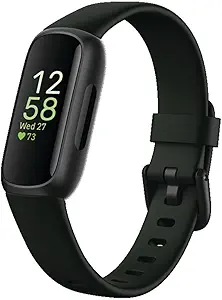
Key Features: Stress management, workout intensity tracking, 24/7 heart rate monitoring, sleep tracking with sleep score and sleep profile, 3-month Google Health Premium included, slim wristband design.
Price Range: Budget to mid-range, with optional premium subscription.
The Fitbit Inspire 3 brings a lot of value at a price that will not shock your bank account. It is the most accessible device on this list, and it delivers solid best sleep tracker performance for everyday users who want to improve their health without overwhelming complexity.
Fitbit’s sleep tracking is well-established and trusted by millions of people. The Inspire 3 tracks your sleep stages, including light, deep, and REM sleep. Each morning, you receive a Sleep Score out of 100. Over time, Fitbit also creates a Sleep Profile that assigns you one of six animal types based on your long-term patterns. This gamified approach makes engaging with your data feel fun rather than clinical.
The 24/7 heart rate monitoring is impressively reliable for a device at this price point. Fitbit uses this data not just for sleep, but also for stress management. The device detects your body’s stress response through a metric called electrodermal activity (EDA), which measures small electrical signals on your skin. This is a feature you rarely find in budget trackers.
The three-month Google Health Premium membership included in the box adds guided programmes, deeper analysis, and nutrition tracking at no extra cost for 90 days.
The Inspire 3 is also very lightweight and thin. Most users forget they are wearing it, which is important for accurate sleep data because discomfort leads to restless nights.
The limitations: The Inspire 3 does not have GPS, an altimeter, or advanced women’s health features beyond basic cycle tracking. Its battery lasts around eight to ten days, which is respectable but not as long as the WHOOP or Oura Ring.
User Experiences:
Nora, 27, a teacher, said: “I bought the Inspire 3 because I could not afford the Oura. I was surprised by how much it taught me. I had no idea I was getting so little deep sleep until I saw the chart. The stress tracking is also eye-opening.”
Samuel, 45, an accountant, said: “My doctor suggested I track my sleep after I complained about tiredness. The Fitbit was easy to set up and easy to understand. The Sleep Score gives me one number to focus on each morning, which suits me perfectly.”
Verdict: The Fitbit Inspire 3 is the best sleep tracker for people who want reliable, easy-to-understand sleep data at an affordable price. It earns its place among the best sleep tracker consumer reports often highlight for value.
#4 RingConn Gen 2 Air (Dune Gold, Size 8) — Best for No-Subscription Simplicity

Key Features: Ultra-thin design, AI-powered health tracking, 10-day battery life, fitness, sleep, stress, and heart rate tracking, no app fee for standard features, iOS and Android compatible.
Price Range: Mid-range, with no ongoing subscription required for core features.
The RingConn Gen 2 Air is a compelling alternative in the smart ring category. Its biggest selling point is simple: there is no subscription fee for the standard features. You pay once and own the full experience. For users frustrated by the recurring costs of Oura or WHOOP, this is a very attractive proposition.
In terms of design, the Gen 2 Air lives up to its name. It is ultra-thin and remarkably light, making it one of the most comfortable options for overnight wear. The Dune Gold finish also looks premium, so it doubles as an everyday accessory.
Sleep tracking covers all the key metrics: total sleep time, sleep stages, heart rate, blood oxygen saturation, and sleep quality scoring. The AI analysis adds contextual insights that help you understand the why behind your numbers. This positions the RingConn among the most accurate sleep trackers in the ring category, though it does not quite match Oura’s depth of analysis.
Stress tracking uses heart rate variability patterns to flag periods of elevated stress during the day, and this integrates into your sleep analysis to help you connect daytime tension with nighttime rest quality.
Battery life sits at 10 days, which is solid. Charging is fast, taking around 60 to 90 minutes to reach full power.
The companion app is clean and intuitive. Data is presented clearly without requiring you to dig through menus to find what you need.
The trade-off: The RingConn’s AI insights are not as sophisticated as Oura’s, and its women’s health features are less developed. However, for users who want a capable, no-fuss best wearable sleep tracker without monthly bills, it is an excellent choice.
User Experiences:
Annabelle, 31, a software developer, said: “I tried the Oura first but could not justify the subscription on top of the ring price. The RingConn gives me everything I actually use daily. The sleep data is clear, and I love that I am not paying every month.”
Michael, 38, a physiotherapist, said: “My patients often ask me about sleep tracking. I recommend the RingConn to those on a budget. It tracks the essentials accurately and the ring is so thin that patients with wrist issues find it much easier to wear than a band.”
Verdict: The RingConn Gen 2 Air is the best wearable sleep tracker for anyone who wants smart ring convenience and accurate sleep monitoring without a subscription. It challenges even the best non-wearable sleep tracker setups in terms of convenience and insight.
#5 Xiaomi Smart Band 9 Pro — Best Entry-Level Option

Key Features: 1.74-inch AMOLED display, blood oxygen monitoring, built-in GPS, health monitoring, 150-plus sports modes, heart rate tracking, global version.
Price Range: Budget range, one-time purchase with no subscription.
The Xiaomi Smart Band 9 Pro rounds out our list as the most affordable option that still delivers genuine sleep tracking capability. It punches well above its price class with a large, vibrant AMOLED display, built-in GPS, and over 150 sports modes.
Sleep tracking on the Band 9 Pro covers the fundamentals well. It monitors sleep stages, heart rate during sleep, blood oxygen levels, and provides a morning sleep quality summary. The data is clean and easy to read on the generous 1.74-inch screen directly on your wrist.
Blood oxygen monitoring is particularly noteworthy at this price point. SpO2 tracking during sleep can flag breathing irregularities that may indicate issues like sleep apnoea, making this more medically relevant than many people expect from a budget band.
The built-in GPS is a genuine bonus. Most sleep trackers at this price rely on your phone’s GPS for workout tracking, but the Band 9 Pro works independently. This makes it a strong all-round fitness companion, not just a sleep device.
Battery life varies depending on GPS use but averages around 14 days in standard mode, which is impressive.
The large screen also makes it easy to check sleep stats without opening your phone, which is a convenience advantage over ring-style trackers.
The limitations: Xiaomi’s sleep staging accuracy is not as refined as Oura or WHOOP. The app, Mi Fitness, is functional but lacks the depth of coaching and AI insight found in premium options. There is also no women’s cycle tracking.
User Experiences:
Enoch, 22, a university student, said: “I could not spend much money, but I still wanted to understand my sleep. The Xiaomi Band 9 Pro was perfect. I can see my sleep stages each morning and it motivates me to go to bed earlier before exams.”
Becky, 33, a small business owner, said: “I use it mainly for fitness but the sleep data has been eye-opening. I never realised how shallow my sleep was during stressful work weeks. It is simple, affordable, and it does the job.”
Verdict: The Xiaomi Smart Band 9 Pro is the best sleep tracker entry point for people new to health tracking or working with a tight budget. It delivers credible, actionable sleep data for a fraction of the cost of premium devices.
How Accurate Are Sleep Trackers? What You Should Know
This is one of the most common questions around wearable health tech. The honest answer is that most consumer sleep trackers are not as accurate as clinical polysomnography (a hospital sleep study), but they are far more useful for everyday health awareness than doing nothing at all.
Research suggests that wrist-based and ring-based trackers are reasonably good at detecting total sleep time and differentiating between sleep and wakefulness. However, detecting specific sleep stages like deep or REM sleep is harder, and accuracy varies between devices.
The most accurate sleep trackers, based on both research and user experience, are those that use multiple sensors together. Devices like the Oura Ring 4 and WHOOP 5.0 combine heart rate, HRV, skin temperature, and accelerometer data. This multi-sensor approach produces significantly more reliable results than simpler motion-only trackers.
Therefore, when people ask how accurate are sleep trackers, the answer depends heavily on the device. Premium multi-sensor devices like those on this list are meaningfully more accurate than basic fitness bands.
Comparing Sleep Tracker Form Factors
Not everyone wants to wear a ring. Some people prefer a wrist-worn band. Others wonder about the best non-wearable sleep tracker, which includes under-mattress sensors and bedside devices. While those options exist, they lack the personal biometric data that wearable trackers capture, especially heart rate and HRV.
For most people, a ring or slim wristband offers the best balance of comfort, accuracy, and convenience. Rings are particularly popular for sleep because they do not shift around the wrist during the night.
Final Comparison: Which One Is Right for You?
Here is a quick summary to help you decide:
Choose the Oura Ring 4 if you want the deepest sleep insights, women’s health tracking, and the most comfortable overnight wear. It is our pick for the best wearable sleep tracker overall.
Choose the WHOOP 5.0 if you are a serious athlete or fitness-focused person who wants recovery coaching based on your strain, and you do not mind the subscription model.
Choose the Fitbit Inspire 3 if you want a trusted, easy-to-use sleep tracker at a reasonable price, with a great app and built-in stress tracking.
Choose the RingConn Gen 2 Air if you want smart ring convenience, solid sleep data, and no ongoing subscription fees. It is ideal for those stepping up from basic trackers.
Choose the Xiaomi Smart Band 9 Pro if you are on a tight budget and want an entry-level device that still delivers meaningful sleep monitoring with bonus features like GPS.
Conclusion: Sleep Smarter in 2026
The best wearable sleep tracker for you depends on your budget, your goals, and how you like to receive your health data. All five devices on this list will give you a meaningful improvement in your understanding of your own sleep. However, the Oura Ring 4 stands above the rest for its accuracy, comfort, and insight depth.
In conclusion, tracking your sleep is one of the easiest high-impact changes you can make to your health routine. Whether you spend a little or invest heavily, using any of these best sleep trackers will help you wake up with better information, and better information leads to better decisions. Start tracking, start sleeping better, and feel the difference for yourself.