
Finding the best cream for rosacea on face is one of the most important steps toward managing a condition that affects millions of adults worldwide. Rosacea causes persistent facial redness, visible blood vessels, and skin sensitivity that makes everyday skincare feel like a minefield. The best cream for rosacea on face must calm inflammation, strengthen the skin barrier, and avoid the harsh ingredients that trigger flare-ups rather than prevent them.
Here are the 6 Best Cream for Rosacea on Face:
- La Roche-Posay Toleriane Double Repair Face Moisturizer – Repairs the skin barrier and reduces redness with ceramides and niacinamide.
- Anua Azelaic Acid 10 Hyaluron Redness Soothing Serum – Reduces rosacea-related redness and blemishes while hydrating sensitive skin.
- Cetaphil Night Cream Redness Relieving Night Moisturizer – Calms facial redness and restores moisture overnight for rosacea-prone skin.
- Aveeno Calm + Restore Redness Relief Moisturizing Face Cream – Soothes sensitive skin and strengthens the skin barrier with daily hydration.
- Eucerin Skin Balance Night Cream – Restores the skin barrier overnight with intensive hydration and lipid replenishment.
- Vanicream Daily Facial Moisturizer with Ceramides and Hyaluronic Acid – Hydrates sensitive skin and reinforces the skin barrier with a minimalist, fragrance-free formula.
Understanding Rosacea and Why Skincare Matters So Much
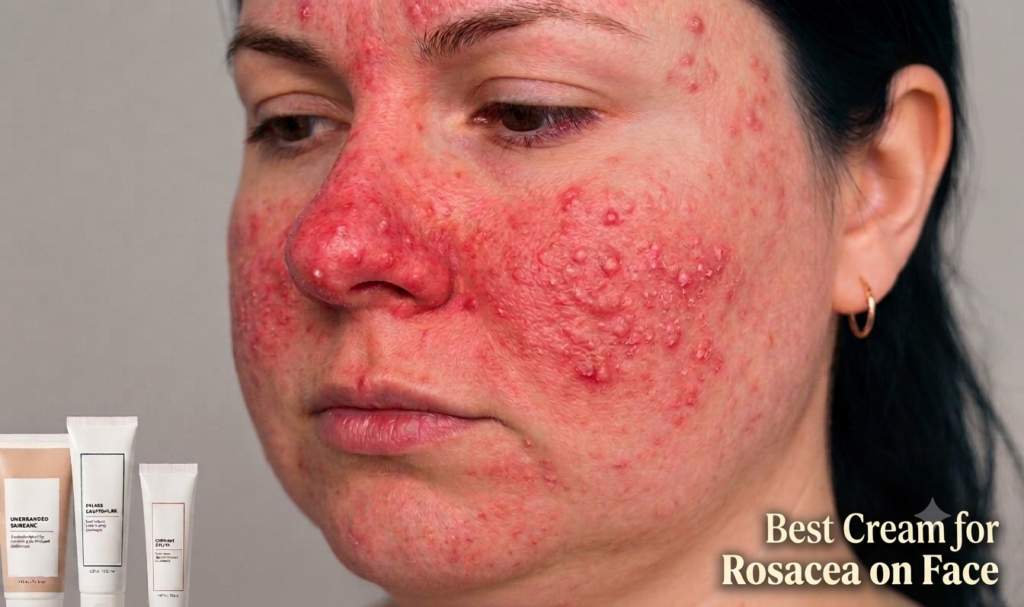
Rosacea is a chronic inflammatory skin condition that primarily affects the face. It typically presents as flushing, persistent redness, small visible blood vessels, and in some cases papules and pustules that resemble acne. It most commonly affects the cheeks, nose, chin, and forehead.
The cause of rosacea is not fully understood, but it involves both vascular and inflammatory components. The skin barrier in rosacea-prone individuals is often compromised, which means moisture escapes more easily and irritants penetrate more readily. This is why skincare products play such a central role in rosacea management — the right routine can significantly reduce flare frequency and severity, while the wrong products can make things dramatically worse.
Harsh ingredients like alcohol, fragrance, strong exfoliants, and synthetic dyes are among the most common skincare triggers for rosacea. Therefore, the best cream for rosacea on face must be formulated without these irritants — a clean, minimal ingredient list is not just a preference for rosacea sufferers, it is a clinical necessity.
Key Ingredients That Help Rosacea-Prone Skin
Before reviewing the products, it is helpful to understand which ingredients consistently benefit rosacea-affected skin.
Ceramides are lipids that naturally occur in the skin barrier. They hold skin cells together and prevent moisture from escaping. Rosacea skin often has a depleted ceramide level, which makes it more reactive and more prone to flushing. Replenishing ceramides strengthens the barrier and reduces sensitivity.
Niacinamide is a form of vitamin B3 with significant anti-inflammatory properties. It reduces redness, improves the skin barrier, minimises the appearance of pores, and calms reactive skin. It is one of the most effective ingredients available for rosacea management in over-the-counter skincare.
Hyaluronic acid is a powerful humectant that draws moisture into the skin and holds it there. Well-hydrated skin is less reactive and less prone to the irritation and flushing that define rosacea flare-ups.
Azelaic acid is particularly relevant for rosacea. It has clinically proven anti-inflammatory and antimicrobial properties, reduces visible redness, and addresses the blemish-like papules and pustules that accompany some rosacea subtypes.
What to avoid: Fragrance, alcohol, menthol, camphor, witch hazel, and exfoliating acids at high concentrations are common rosacea triggers. Every product in this review is free from the most harmful of these irritants.
How We Ranked These Products
We evaluated each product using four criteria: ingredient quality and relevance for rosacea, skin barrier support, clinical or dermatological backing, and real-world user feedback. The ranking reflects the best overall combination of these factors for rosacea-prone facial skin.
Top 6 Best Creams for Rosacea on Face
1. La Roche-Posay Toleriane Double Repair Face Moisturizer: Best Overall Cream for Rosacea on Face

Overview
La Roche-Posay Toleriane Double Repair Face Moisturizer earns the top spot as the best cream for rosacea on face. Its combination of ceramides and niacinamide, delivered in a formula specifically designed for sensitive and redness-prone skin, makes it the most clinically comprehensive option in this review.
The Toleriane Double Repair formula is built around three ceramides, niacinamide, and a prebiotic thermal spring water base — a combination that addresses both the barrier dysfunction and the inflammatory reactivity that define rosacea-prone skin.
Ceramides restore the structural integrity of the skin barrier. When the barrier is weak — as it consistently is in rosacea-prone individuals — moisture escapes, irritants penetrate, and the skin reacts excessively to environmental factors like temperature changes, wind, and sun exposure. The three ceramides in this formula rebuild the barrier from within, making the skin more resilient and less reactive over time.
Niacinamide is the second core active and is particularly valuable for rosacea management. Research consistently shows that niacinamide reduces facial redness, calms inflammation, strengthens the skin barrier, and improves tolerance to environmental stressors. For a skin condition defined by redness and reactivity, niacinamide is one of the most effective anti-inflammatory ingredients available in over-the-counter skincare.
The prebiotic thermal spring water base supports the skin’s natural microbiome — the community of beneficial bacteria that plays an important role in barrier health and inflammatory regulation. A balanced microbiome is associated with calmer, less reactive skin, making this base component particularly relevant for rosacea management.
The formula is oil-free, fragrance-free, and free from parabens and other common irritants. It is suitable for all skin types including oily, combination, and dry, and this broad compatibility makes it genuinely versatile for rosacea patients whose skin can vary significantly in type. The two-pack format provides excellent long-term value for a daily-use product.
Real User Experiences
Caroline, 42, a marketing manager from London: “I have had rosacea for twelve years and tried more products than I can count. Most either do nothing, or they actively trigger a flush. The La Roche-Posay Toleriane Double Repair is the first moisturiser I have used consistently for over eight months because it genuinely works. The redness on my cheeks and nose is visibly reduced. It absorbs quickly, does not feel heavy, and does not break me out. My dermatologist specifically recommended it and I understand why — the ceramide and niacinamide combination is exactly what rosacea skin needs.”
James, 38, a software developer from Edinburgh: “I was embarrassed to discuss my facial redness for years before being properly diagnosed with rosacea. My GP referred me to a dermatologist who recommended the Toleriane Double Repair as a daily moisturiser alongside my prescribed treatment. The combination worked significantly better than the prescription alone had. My skin barrier feels stronger — less reactive to cold air, central heating, and stress flushes. It is lightweight enough to use under sunscreen in the morning, which matters because sun protection is essential for rosacea.”
Verdict: La Roche-Posay Toleriane Double Repair is the best cream for rosacea on face for comprehensive, daily barrier repair. Its ceramide and niacinamide formula delivers dermatologist-backed redness reduction and barrier strengthening that no other product in this review matches as completely.
2. Anua Azelaic Acid 10 Hyaluron Redness Soothing Serum: Best Active Treatment Serum for Rosacea

Overview
Anua Azelaic Acid 10 Hyaluron Redness Soothing Serum earns second place as the best active treatment option in the best cream for rosacea on face category. Its 10% azelaic acid formula addresses rosacea inflammation and blemishes directly, while hyaluronic acid provides simultaneous deep hydration.
Azelaic acid is one of a very small number of ingredients with a direct clinical evidence base specifically for rosacea treatment. It has been used in prescription rosacea therapy for decades, typically at concentrations of 15–20%. At 10%, Anua’s formula delivers meaningful therapeutic activity in an over-the-counter serum that is gentle enough for sensitive, reactive skin.
Azelaic acid works through several mechanisms simultaneously. It reduces the inflammatory response in the skin, calms the papules and pustules associated with papulopustular rosacea, and gently inhibits the abnormal vascular reactivity that causes flushing and persistent redness. Few single ingredients address as many aspects of rosacea as effectively as azelaic acid at this concentration.
The hyaluronic acid in the formula serves a dual purpose. It provides immediate and sustained hydration, keeping the skin barrier supple and reducing the tight, uncomfortable sensation that rosacea skin often experiences. It also counterbalances any potential dryness from the azelaic acid, making the serum comfortable for daily use without the peeling or sensitivity that higher-acid formulas can cause.
This is a Korean skincare formulation, and the lightweight, fast-absorbing serum texture reflects that category’s emphasis on layerable, elegant product formats. The 1.01 fl oz size is compact and travel-friendly. As a serum rather than a cream, it is designed to be used beneath a moisturiser — making it an excellent step-one active treatment to use before applying any of the barrier-focused creams in this review.
Real User Experiences
Sophia, 35, a graphic designer from Manchester: “My rosacea is the papulopustular subtype, which means I get both redness and small spots on my cheeks and chin. Finding products that address both without causing further irritation has been the central challenge of my skincare life. Anua Azelaic Acid Serum is the first over-the-counter product that has genuinely reduced both. Within three weeks, the spots were significantly fewer, and the overall redness on my cheeks was noticeably calmer. I layer it under the La Roche-Posay moisturiser and the combination is the best my skin has ever looked.”
Richard, 46, a secondary school teacher from Birmingham: “I was using a prescription azelaic acid product that worked well but was expensive and required repeat GP appointments. My dermatologist suggested trying the Anua 10% serum as a maintenance option between prescription courses. The results have been comparable to the prescription at a fraction of the cost. The redness on my nose and cheeks stays controlled and the formula is gentle enough that my skin does not react to it. The Korean skincare approach to texture and absorption is genuinely impressive.”
Verdict: Anua Azelaic Acid Serum is the best cream for rosacea on face — or more accurately, the best active serum — for anyone who wants clinically relevant rosacea treatment ingredients in an affordable, elegant over-the-counter format.
3. Cetaphil Night Cream Redness Relieving Night Moisturizer: Best Overnight Cream for Rosacea

Overview
Cetaphil Night Cream Redness Relieving Night Moisturizer earns third place as the best overnight best cream for rosacea on face. Its formula is specifically designed for redness-prone and dry skin, working through the night to reduce visible redness and restore moisture while the skin undergoes its natural repair cycle.
Cetaphil formulated this night cream specifically around the needs of redness-prone skin. The formula contains licorice root extract, which has clinically supported anti-redness and anti-inflammatory properties. Licorice root’s active compound glabridin inhibits melanin production and reduces vascular reactivity, which directly addresses the redness component of rosacea over consistent use.
The night cream format takes advantage of the skin’s natural repair cycle. During sleep, the skin undergoes cellular renewal, collagen production, and barrier repair at a higher rate than during waking hours. A rich, supportive cream applied at bedtime provides the ideal environment for this process — reducing inflammation, locking in moisture, and supporting barrier recovery through the night.
Cetaphil’s formula is hypoallergenic and fragrance-free, meeting the non-irritating standard that rosacea skin demands. The texture is rich enough to deliver genuine overnight hydration without being so heavy that it causes congestion or milia — a common risk with overly occlusive night creams on sensitive skin.
At 1.7 fl oz, the product is compact and practical. Cetaphil is a brand with longstanding dermatological credibility, widely recommended in clinical settings for sensitive and compromised skin. This night cream extends that heritage into a product specifically addressing rosacea’s most visible and distressing symptom: redness.
Real User Experiences
Helen, 51, a retired nurse from Cardiff: “Rosacea redness was the thing that affected my confidence most. I was always conscious of how red my cheeks looked in photographs. My dermatologist suggested adding a dedicated redness-relief night cream to my routine. The Cetaphil Night Cream has made a real difference. After six weeks of nightly use, the baseline redness on my cheeks is noticeably reduced. I wake up with calmer skin and the improvement carries through the day. It is gentle, effective, and I have had no reactions to it.”
Andrew, 44, a journalist from Bristol: “I added the Cetaphil Night Cream to my routine about four months ago after struggling to find something that specifically targeted redness rather than just moisturising. The licorice extract makes scientific sense to me and the results bear it out. My skin is measurably less red in the mornings compared to before I started using it. The texture is comfortable — not greasy, not too light. A well-formulated, focused product that does exactly what it says.”
Verdict: Cetaphil Night Cream is the best cream for rosacea on face for overnight redness relief. Its licorice root formula, hypoallergenic profile, and overnight delivery format make it an excellent dedicated night treatment for rosacea-prone skin.
4. Aveeno Calm + Restore Redness Relief Moisturizing Face Cream: Best Daily Cream for Sensitive Rosacea Skin

Overview
Aveeno Calm + Restore Redness Relief Moisturizing Face Cream earns fourth place as the best everyday best cream for rosacea on face for sensitive, reactive skin that needs consistent, gentle calming. Its combination of ceramide and vitamin B5 in a fragrance-free, hypoallergenic formula delivers reliable daily comfort for rosacea sufferers.
Aveeno builds this cream around a dual-active approach: ceramide for barrier repair and vitamin B5 (panthenol) for moisture retention and soothing. Ceramide restores the skin’s structural lipid layer, which is consistently depleted in rosacea-prone skin, reducing the permeability that allows environmental irritants to trigger inflammation.
Panthenol, or vitamin B5, is a well-documented skin-conditioning ingredient that draws moisture into the skin and supports the healing of irritated or compromised tissue. For rosacea skin that is frequently in a state of mild inflammation, panthenol’s soothing and moisture-binding properties are particularly relevant. It softens the skin, reduces the tight, uncomfortable sensation associated with dryness and reactivity, and supports the skin’s natural repair process.
The cream is non-comedogenic, which is important for rosacea patients who may also have oily or combination skin. Rosacea does not only affect dry skin types — many sufferers have naturally oily or combination complexions and need a moisturiser that provides hydration without blocking pores or adding to skin congestion.
The hypoallergenic and fragrance-free formulation meets the non-irritating standard that sensitive, reactive skin demands. At 1.7 oz, it is a practical size for a daily-use face cream. Aveeno’s dermatological heritage adds credibility to a product designed for challenging skin conditions.
Real User Experiences
Laura, 39, a primary school teacher from Nottingham: “Teaching means I spend all day in a warm environment with temperature changes between the classroom and outside. Both trigger my rosacea badly. I needed a daily moisturiser that calmed my skin throughout those challenges without being too heavy under my SPF and light makeup. The Aveeno Calm + Restore Redness Relief cream is exactly right. It absorbs quickly, does not feel thick on my skin, and my redness is noticeably less intense during the day since I started using it.”
Tom, 49, a pharmacist from Leicester: “I know skincare ingredients well enough to evaluate this objectively. Ceramide and panthenol are a sensible and well-supported combination for rosacea skin. The cream performs as the ingredients suggest it should — my skin barrier feels more robust and the reactive flushing I used to experience when moving between temperature extremes is significantly reduced. It is a clean, straightforward formulation that does not overcomplicate things. Exactly what I want in a daily skincare product.”
Verdict: Aveeno Calm + Restore Redness Relief is the best cream for rosacea on face for daily use on sensitive skin. Its ceramide and vitamin B5 formula provides consistent, gentle barrier support and redness calming in a lightweight, non-comedogenic cream.
5. Eucerin Skin Balance Night Cream: Best Overnight Rosacea Cream for Barrier Restoration

Overview
Eucerin Skin Balance Night Cream earns fifth place as the best overnight barrier repair option in the best cream for rosacea on face category. Its Tri-Balance Complex targets the three core skin needs in rosacea-prone skin — moisture, lipids, and natural moisturising factors — making it one of the most scientifically constructed formulas in this review.
Eucerin’s proprietary Tri-Balance Complex is the defining feature of this cream. The complex works by replenishing the three essential components of healthy skin balance: natural moisturising factors (NMFs) that retain water, lipids that form the skin barrier structure, and additional moisture-binding compounds. Together, these three elements address the multiple ways in which rosacea-prone skin loses its equilibrium.
Natural moisturising factors are amino acids, urea, and other small molecules naturally produced by the skin to maintain hydration. In sensitive and rosacea-affected skin, NMF levels are often reduced, contributing to dryness, tightness, and increased reactivity. The Tri-Balance Complex replenishes these directly through the cream’s formulation.
The night cream texture is richer than the daytime options in this review, making it specifically suited to overnight use when the skin is not exposed to environmental triggers and can benefit from a denser moisture barrier. Applied after a serum or treatment step, it seals in all previous layers and works alongside the skin’s natural repair cycle during sleep.
Eucerin is one of the most dermatologist-recommended brands globally, particularly in Europe, where its formulations are widely used in clinical sensitive skin protocols. This Night Cream reflects that credibility, offering a rigorously formulated product that goes beyond surface hydration to address the biochemical imbalances that drive sensitive skin reactivity.
Real User Experiences
Diane, 55, a retired pharmacist from Glasgow: “Eucerin has been my brand of choice for sensitive skin products for years because the formulations are always evidence-based rather than trend-driven. The Skin Balance Night Cream is impressive. The Tri-Balance Complex concept is grounded in real skin science — replenishing NMFs alongside lipids is the correct approach to compromised barrier function. My skin is calmer and more comfortable in the mornings since I started using it consistently. For a night cream, the texture is rich without being heavy or suffocating.”
Marcus, 52, a business analyst from Southampton: “My rosacea tends to be worst in winter when central heating dries my skin out significantly. The Eucerin Skin Balance Night Cream has become my winter essential. I apply it after my evening serum and wake up with skin that feels genuinely replenished rather than tight and irritated. The redness on my cheeks is measurably less intense through the morning after a good night’s application. A thoughtful, well-made product from a brand I trust completely.”
Verdict: Eucerin Skin Balance Night Cream is the best cream for rosacea on face for overnight intensive barrier restoration. Its Tri-Balance Complex delivers a level of skin science sophistication that makes it a standout option for rosacea sufferers who need serious overnight repair.
6. Vanicream Daily Facial Moisturizer with Ceramides and Hyaluronic Acid: Best Minimalist Formula for Rosacea

Overview
Vanicream Daily Facial Moisturizer with Ceramides and Hyaluronic Acid rounds out our list as the best minimalist best cream for rosacea on face. Its clean, paired-down formula built on ceramides and hyaluronic acid, free from virtually all known common irritants, makes it one of the safest and most broadly tolerated daily moisturisers for rosacea-prone skin.
Vanicream built its entire brand around skin that reacts to almost everything. The Daily Facial Moisturizer reflects that philosophy with a formula that removes every unnecessary ingredient and delivers only what sensitive skin genuinely needs. The result is a clean, minimal moisturiser that is exceptionally unlikely to cause irritation or trigger a rosacea flare.
Ceramides provide the barrier repair function — replenishing the lipid layer that keeps moisture in and irritants out. Hyaluronic acid adds humectant hydration, drawing water into the skin and holding it there for sustained comfort throughout the day. These two ingredients together create the core of what any rosacea-safe moisturiser should do — without adding anything that might compromise that goal.
The formula is free from fragrance, dyes, lanolin, parabens, formaldehyde releasers, and every other additive most likely to cause reactions in sensitive skin. This comprehensive free-from profile is what makes Vanicream the first recommendation from many dermatologists for patients who need to identify safe products after a reaction or sensitisation event.
At 3 fl oz, the bottle is compact and travel-friendly. The lightweight texture absorbs quickly without a greasy feel, making it comfortable under SPF or makeup. For rosacea patients who are still identifying their specific triggers and want to build from the safest possible foundation, Vanicream Daily Facial Moisturizer is the ideal starting point.
Real User Experiences
Sarah, 33, a laboratory technician from Leeds: “I had a severe rosacea flare after reacting to a skincare product that contained hidden fragrance. My dermatologist put me on a completely clean routine to reset my skin. Vanicream Daily Facial Moisturizer was the first product back in. It caused absolutely no reaction and my skin genuinely calmed down within two weeks of using it twice daily. The ceramides and hyaluronic acid are exactly what my compromised barrier needed. It is not the most exciting product on the market, but it is the most trustworthy one I have ever used.”
Peter, 57, a secondary school head teacher from Norwich: “I have tried countless skincare products for my rosacea over the years and always approached new ones with anxiety about whether they would trigger a flare. Vanicream removed that anxiety completely. The ingredient list is clean, short, and sensible. My skin responds well to it — the redness is calmer, the barrier feels more robust, and I have had no reactions in seven months of consistent use. Sometimes the simplest formulation is the most effective one.”
Verdict: Vanicream Daily Facial Moisturizer is the best cream for rosacea on face for those who want the safest, most irritant-free formula available. Its clean ceramide and hyaluronic acid base makes it the ideal daily moisturiser for newly sensitised, reactive, or highly rosacea-prone skin.
Building a Simple Rosacea Skincare Routine
The right individual products matter, but so does the overall routine structure. Here is a simple, safe daily routine built around the products in this review:
Morning routine: Apply the Anua Azelaic Acid Serum first to clean, dry skin. Allow it to absorb for two to three minutes. Follow with either the La Roche-Posay Toleriane Double Repair or the Vanicream Daily Facial Moisturizer as your barrier cream. Always finish with a broad-spectrum SPF 30 or higher — sun exposure is one of the most consistent rosacea triggers and daily SPF is non-negotiable.
Evening routine: Cleanse gently with a fragrance-free, non-foaming cleanser. Apply the Anua serum again if your skin tolerates it well. Follow with either the Cetaphil Redness Relieving Night Cream or the Eucerin Skin Balance Night Cream as your final step.
Consistency is what produces results with rosacea skincare. Give each product at least four to six weeks of regular use before evaluating its effect — skin barrier improvement and inflammatory calming happen gradually.
Triggers to Avoid Alongside Your Cream Routine
Even the best cream for rosacea on face will underperform if common triggers are not addressed alongside it. The most consistent rosacea triggers include:
Sun exposure — Always wear SPF. Even incidental daily sun exposure accumulates and drives rosacea inflammation over time.
Heat — Hot showers, saunas, hot drinks, and spicy food all dilate blood vessels and trigger flushing. Lukewarm water and cooling environments reduce this effect.
Alcohol — Red wine is a particularly potent trigger. Even moderate alcohol consumption worsens rosacea flushing and inflammation in most sufferers.
Harsh skincare ingredients — Fragrance, alcohol, strong exfoliating acids, and menthol are the most common skincare-specific triggers. Every product in this review avoids these.
Stress — Emotional stress triggers cortisol release, which directly worsens inflammation. Stress management strategies support rosacea management alongside topical treatment.
When to See a Dermatologist
Over-the-counter creams and serums manage mild to moderate rosacea well for most people. However, some situations require professional treatment. See a dermatologist if your rosacea is causing significant visible blood vessels, persistent painful papules or pustules, eye symptoms such as dryness or redness, or if your symptoms are worsening despite a consistent skincare routine.
A dermatologist can confirm your rosacea subtype and prescribe targeted treatments such as azelaic acid at higher concentrations, metronidazole gel, brimonidine for persistent redness, or oral antibiotics for inflammatory subtypes. Laser and light therapies are also effective for reducing persistent visible blood vessels.
Final Thoughts
Managing rosacea requires a consistent, gentle, evidence-based skincare routine built around products that repair the skin barrier, reduce inflammation, and avoid every ingredient that makes the condition worse. All six products in this review meet that standard.
The La Roche-Posay Toleriane Double Repair leads the ranking as the most complete daily moisturiser for rosacea-prone skin, combining ceramides and niacinamide with a prebiotic base. The Anua Azelaic Acid Serum provides the closest to prescription-grade active treatment available over the counter. Cetaphil Night Cream and Eucerin Skin Balance Night Cream cover the overnight repair cycle from different angles. The Aveeno Calm + Restore is the best gentle daily option for sensitive skin, and Vanicream Daily Facial Moisturizer offers the cleanest, most universally tolerated formula for the most reactive skin.
Choose the products that match your routine, skin type, and budget. Apply them consistently, protect your skin from triggers, and give each product the time it needs to deliver results. With the right daily routine, rosacea is very manageable — and your skin can feel calmer, stronger, and more comfortable every single day.
Always consult a dermatologist or qualified healthcare professional if your rosacea is severe, worsening, or affecting your eyes. This article is intended for informational purposes only and does not constitute medical advice.