
The best cream for crow’s feet does more than moisturize. It targets the fine lines that form around your eyes when you smile, squint, or spend years in the sun. In this guide, we review five popular eye creams and rank them from best to worst, so you can choose the right one for your skin.
Crow’s feet are one of the most common signs of aging on the face. They show up early because the skin around your eyes is thinner than skin anywhere else on your body.
Here’s our 5 Best Cream for Crow’s Feet, According to Derms:
- Revision Skincare D·E·J Eye Cream® – Firms skin, smooths crow’s feet, strengthens the moisture barrier, and reduces fine lines with peptides and hydrators.
- Shiseido Benefiance Wrinkle Smoothing Eye Cream – Hydrates for up to 48 hours while reducing crow’s feet, puffiness, dark circles, and multiple eye wrinkles.
- Augustinus Bader The Eye Cream – Supports skin renewal to firm, brighten, reduce puffiness, and soften fine lines around the eyes.
- iS Clinical Youth Eye Complex – Brightens, hydrates, and helps prevent crow’s feet while reducing puffiness with antioxidant-rich ingredients.
- La Mer The Eye Concentrate – Deeply hydrates and nourishes the eye area, improving skin texture and softness while minimizing dryness.
What Causes Crow’s Feet?
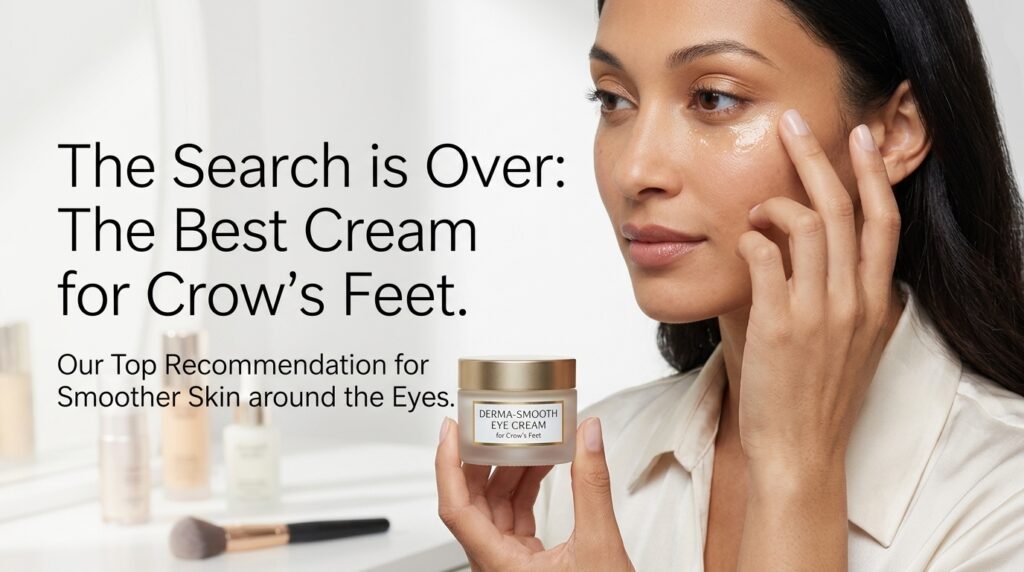
Before we dive into the reviews, let’s cover the basics. This will help you understand why certain ingredients matter more than others when you’re shopping for the best cream for crow’s feet.
Photoaging and Sun Exposure
Photoaging is skin damage caused by sun exposure. It’s different from intrinsic aging, which is the natural aging process that happens simply because time passes. Photoaging is a form of extrinsic aging, meaning it comes from outside sources rather than genetics.
Years of sun exposure break down the skin’s support structure. This is one of the biggest reasons crow’s feet appear earlier in people who spend a lot of time outdoors without sun protection.
Oxidative Stress and Free Radicals
Oxidative stress happens when free radicals build up in the skin faster than your body can neutralize them. Free radicals are unstable molecules created by sun exposure, pollution, and stress. They damage skin cells and speed up visible aging.
This damage doesn’t stay on the surface. It reaches deep into the dermis, the lower layer of skin that holds collagen and elastin fibers in place.
Collagen Degradation and Elastin Fibers
Collagen degradation is the breakdown of collagen, the protein that keeps skin firm and plump. Elastin fibers work alongside collagen to help skin snap back into place after you move your face. Together, they keep the skin smooth and elastic.
As we age, fibroblasts — the cells responsible for producing collagen and elastin — slow down. Less collagen means less structure. This is why skin around the eyes starts to fold instead of bounce back.
Facial Expressions and Repeated Movement
Every time you smile, squint, or laugh, the skin around your eyes creases. These creases are caused by facial expressions repeated thousands of times over the years. Over time, they become permanent lines instead of temporary ones.
This is a big reason crow’s feet form earlier than wrinkles elsewhere on the face. The eye area moves constantly, and the skin there is delicate.
The Epidermis, Moisture Barrier, and Water Loss
The epidermis is the outermost layer of skin. It houses your moisture barrier, which locks in hydration and keeps irritants out. When this barrier weakens, you experience transepidermal water loss, or TEWL. This means water escapes the skin faster than it should, leaving skin dry and prone to fine lines.
A strong moisture barrier is essential for smooth, plump skin. Therefore, any cream you choose should help repair and support it.
Skin Turnover and Cell Renewal
Skin turnover, also called cell renewal, is the process where old skin cells shed and new ones take their place. This process slows down with age. Slower cell renewal means dull, thinner-looking skin that shows fine lines more easily.
The best cream for crow’s feet should support this renewal process. It should also protect the skin from further oxidative stress while restoring what’s already been lost.
Now that you understand the science, let’s look at how each product measures up.
The 5 Best Creams for Crow’s Feet, Ranked
We tested and reviewed five popular eye creams. Each one claims to fight fine lines, but not all of them deliver the same results. Here’s our ranking, starting with the best cream for crow’s feet on the market today.
1. Revision Skincare D·E·J Eye Cream®

Revision Skincare D·E·J Eye Cream takes the top spot as the best cream for crow’s feet in our ranking. It combines firming peptides with deep moisturizing agents to target fine lines, wrinkles, and crow’s feet directly. The formula works on multiple layers of the skin, addressing both the epidermis and the deeper structural support beneath it.
This cream stands out because it treats the root causes of aging, not just the surface symptoms. It supports collagen production while also reinforcing the moisture barrier. As a result, skin looks firmer within weeks, not months.
What it does well:
- Firms sagging skin around the eye area
- Reduces the appearance of fine lines and crow’s feet
- Strengthens the moisture barrier to prevent water loss
- Works well under makeup without pilling
Real experience:
Karen, 48, marketing manager: “I’ve tried at least ten eye creams over the years. This is the first one where I actually saw my crow’s feet soften within a month. My skin around the eyes feels tighter, and I don’t have that crepey texture anymore.”
David, 52, teacher: “My wife recommended this after seeing her results. I was skeptical at first because men don’t usually see eye cream ads. But the puffiness under my eyes went down, and the lines by my eyes look softer. Worth the price.”
2. Shiseido Benefiance Wrinkle Smoothing Eye Cream

Shiseido Benefiance Wrinkle Smoothing Eye Cream comes in second place. This cream specifically targets five types of eye wrinkles, including the fine lines caused by facial expressions. It also addresses dark circles and puffiness, making it a well-rounded option.
One of its biggest strengths is 48-hour hydration. This means your moisture barrier stays supported even if you skip a day of application. In addition, it’s non-comedogenic, so it won’t clog pores or cause breakouts, even for sensitive skin types.
What it does well:
- Targets five distinct types of eye wrinkles, including crow’s feet
- Provides long-lasting hydration to reduce transepidermal water loss
- Reduces puffiness and brightens dark circles
- Suitable for all skin types, including sensitive skin
Real experience:
Linda, 55, retired nurse: “I have very sensitive skin, so I was nervous to try a new eye cream. This one never irritated me, not even once. My crow’s feet are less noticeable, and my under-eye area looks brighter overall.”
James, 60, retired accountant: “I liked that this cream focuses on more than one type of wrinkle. My skin used to feel dry by midday, but now it stays hydrated much longer. The texture around my eyes has definitely improved.”
3. Augustinus Bader The Eye Cream

Augustinus Bader The Eye Cream lands in third place. This is a luxury option built around the brand’s signature TFC8 technology, which is designed to support the skin’s natural renewal processes. It firms, brightens, and reduces both puffiness and fine lines in one formula.
This cream focuses heavily on cell renewal and skin turnover. Because it supports the skin’s own repair mechanisms, results tend to build gradually over time rather than appearing overnight. Many consider it the best cream for crow’s feet if budget is not a concern.
What it does well:
- Firms and brightens the under-eye area
- Supports natural skin renewal and cell turnover
- Reduces puffiness and the look of fine lines
- Feels lightweight and absorbs quickly
Real experience:
Michelle, 44, small business owner: “This is expensive, so I expected a lot. It didn’t disappoint. My skin feels noticeably firmer, and the fine lines around my eyes are less deep. However, it took about six weeks before I saw real change.”
Robert, 50, architect: “I’ll admit I bought this because of the hype. The results are good, though not dramatic. My crow’s feet are slightly softer, and my skin definitely looks more awake in the morning. I just wish it were more affordable.”
4. iS Clinical Youth Eye Complex

iS Clinical Youth Eye Complex ranks fourth on our list. This anti-aging, brightening cream is formulated to reduce puffiness while hydrating and firming the eye area. It contains antioxidants that help fight free radicals and reduce oxidative stress in the skin.
This cream works well as a preventative option. If you’re just starting to notice early signs of crow’s feet, this formula can help slow further collagen degradation. However, it may take longer to show visible results on deeper, more established lines.
What it does well:
- Brightens the under-eye area effectively
- Fights free radicals with antioxidant ingredients
- Reduces puffiness after a few weeks of use
- Lightweight formula that layers well with other products
Real experience:
Angela, 39, graphic designer: “I started using this before my crow’s feet got deep, and I think that’s why it worked so well for me. My under-eye area looks brighter, and the puffiness I used to wake up with is mostly gone.”
Thomas, 46, sales director: “This cream is solid for prevention, but I don’t think it did much for my existing lines. My skin definitely feels more hydrated, and the brightening effect is real. I’d recommend it for someone earlier in the aging process.”
5. La Mer The Eye Concentrate

La Mer The Eye Concentrate rounds out our list in fifth place. This cream is well known for its rich, hydrating formula and luxury price tag. It’s designed to nourish the delicate eye area and improve overall skin texture over time.
While it delivers excellent hydration, it’s less targeted toward crow’s feet specifically compared to the other products on this list. It works better as a general eye treatment than as a dedicated wrinkle-fighting formula. For dry skin, it can be a great addition to a routine, but it isn’t the best cream for crow’s feet if that’s your main concern.
What it does well:
- Delivers intense, long-lasting hydration
- Improves the overall texture of the eye area
- Contains nourishing ingredients that support skin softness
- Luxurious texture that feels soothing on application
Real experience:
Patricia, 58, interior designer: “I love the way this feels on my skin. It’s incredibly hydrating, and my under-eye area feels softer. That said, I didn’t notice a big change in my crow’s feet specifically, even after two months.”
Mark, 53, financial consultant: “This is a beautiful product, no doubt. But for the price, I expected more dramatic results on my fine lines. It’s a great hydrator, just not the strongest option here if wrinkles are your top concern.”
How to Choose the Best Cream for Crow’s Feet
Choosing the right eye cream depends on your specific skin concerns. If firming and wrinkle reduction are your top priority, Revision Skincare D·E·J Eye Cream is the strongest choice. Meanwhile, if you want a well-rounded formula that also fights puffiness and dark circles, Shiseido Benefiance is an excellent option.
If budget isn’t an issue and you want a luxury formula focused on renewal, Augustinus Bader delivers solid results. For prevention, iS Clinical works well on early-stage lines. Finally, if hydration is your main goal, La Mer can still be a nice addition to your routine, even if it’s not the most targeted treatment for crow’s feet.
Tips to Prevent Further Damage
No matter which cream you choose, a few habits will help protect your results. Always wear sunscreen daily, since sun exposure is one of the biggest contributors to photoaging. In addition, avoid rubbing your eyes, since repeated friction can weaken the delicate skin barrier.
Also, stay hydrated and get enough sleep. Both factors affect how well your skin retains moisture and supports natural cell renewal. Finally, be consistent. Even the best cream for crow’s feet needs regular use to show real results.
In Conclusion
Finding the best cream for crow’s feet comes down to understanding your skin’s needs and the science behind aging. Photoaging, oxidative stress, and collagen degradation all play a role in how quickly fine lines appear. Therefore, choosing a cream that supports your moisture barrier, fights free radicals, and encourages skin turnover will give you the best results.
Out of the five products reviewed, Revision Skincare D·E·J Eye Cream stands out as the best cream for crow’s feet overall. However, each of these creams offers real benefits depending on your skin type, budget, and specific concerns. Whichever you choose, consistency and sun protection will always be your best allies in the fight against crow’s feet.
Frequently Asked Questions About the Best Eye Cream for Crow’s feet
What is the difference between retinol, retinal, and retinoids?
Retinol, retinal, and retinoids all belong to the same family of vitamin A derivatives. Retinoids is the umbrella term for this whole group of ingredients. Retinol is the most common form found in over-the-counter eye creams, while retinal, also called retinaldehyde, converts to active vitamin A faster and tends to work more quickly. However, both can irritate sensitive skin, so it’s best to start slowly.
Is bakuchiol a good alternative to retinol?
Yes, bakuchiol is often recommended as a gentler alternative to retinol. It offers similar anti-aging benefits without the dryness or sensitivity that retinoids sometimes cause. This makes bakuchiol a smart choice for people with sensitive skin around the eyes.
Why do eye creams contain hyaluronic acid and glycerin?
Hyaluronic acid and glycerin are both humectants, meaning they draw moisture into the skin. Hyaluronic acid can hold large amounts of water, which plumps the skin and softens fine lines. Glycerin works alongside it to keep the moisture barrier strong and prevent water loss throughout the day.
What do peptides and collagen actually do for crow’s feet?
Peptides are small chains of amino acids that signal your skin to produce more collagen. Collagen itself is the protein responsible for skin firmness. As we age, natural collagen production slows down, so creams with peptides help support the skin’s structure from within, reducing the appearance of crow’s feet over time.
How do ceramides help protect the skin barrier?
Ceramides are lipids that naturally exist in the skin and help hold the moisture barrier together. Without enough ceramides, the skin becomes dry and more prone to fine lines. Eye creams with added ceramides help repair this barrier and keep the delicate eye area protected.
What does niacinamide do in an eye cream?
Niacinamide, also known as vitamin B3, helps even out skin tone and reduce puffiness. It also supports the skin barrier and calms redness. Many eye creams include niacinamide because it works well alongside other active ingredients without causing irritation.
Why are vitamin C and vitamin E often paired together?
Vitamin C and vitamin E are two of the most well-known antioxidants in skincare. Vitamin C brightens skin and supports collagen production, while vitamin E helps protect skin cells from damage. Together, they work better than either ingredient alone, offering stronger protection against free radicals.
Does caffeine really reduce puffiness?
Yes, caffeine is a common ingredient in eye creams because it temporarily tightens the skin and reduces the appearance of puffiness. It also helps improve circulation around the eyes, which can make dark circles look less noticeable.
What is squalane, and is it different from squalene?
Squalane is a stable, skin-friendly oil that mimics the natural oils your skin produces. It’s lightweight and absorbs quickly, making it a popular moisturizing ingredient in eye creams. Unlike its natural counterpart, squalane doesn’t break down as easily, so it stays effective longer in a product.
Are aloe vera and shea butter good for the eye area?
Aloe vera and shea butter are both soothing, moisturizing ingredients. Aloe vera calms irritation and hydrates without feeling heavy, while shea butter provides deeper, richer moisture. Together, they make eye creams gentler for sensitive or dry skin.
What role does green tea extract play in anti-aging creams?
Green tea extract is packed with antioxidants that help fight oxidative stress caused by free radicals. It also has a calming effect on the skin, which makes it useful for reducing redness and irritation around the eyes.
Why is coenzyme Q10 included in some eye creams?
Coenzyme Q10 is a natural antioxidant that helps protect skin cells from damage while supporting energy production within those cells. It’s often included alongside other antioxidants to help slow the visible signs of aging, including crow’s feet.
What are growth factors, and how do they help with wrinkles?
Growth factors are proteins that help stimulate skin cell renewal and repair. In eye creams, growth factors can encourage the skin to produce more collagen and heal itself more efficiently. This makes them a popular ingredient in higher-end anti-aging formulas.
Recommended articles
- 5 Best Treatment for Crows Feet Wrinkles According to Dermatologists
- 5 Best Wrinkle Cream for Crow’s Feet That Actually Work
- 5 Best Cream for Forehead Wrinkles According to Derms
- 5 Best Eye Cream for Crows Feet and Wrinkles
- 13 Best Anti-Aging Skin Care Line for Women: Dermatologist-approved
- 5 Best Cream for Cracked Heels
- 6 Best Cream for Rosacea on Face According to Dermatologists