
You likely want back pain that lets you move and sleep better. This article shows simple physiotherapy moves and safety tips you can try to reduce stiffness, build core support, and ease daily discomfort.
You will learn seven practical exercises and how to do them safely so you can start improving your back function today. The steps include gentle stretches, stability drills, and clear precautions so you can pick what fits your needs and goals.
1) Cat-Cow Stretch (Marjaryasana-Bitilasana)
Start on your hands and knees with your wrists under shoulders and knees under hips. Keep your spine neutral and your gaze down to avoid neck strain.
On the inhale, drop your belly, lift your chest and tailbone, and look slightly forward for the cow pose. Move slowly and feel a gentle arch through the low back.
On the exhale, round your spine upward, tuck your tailbone, and drop your head toward your chest for the cat pose. Continue to move with your breath for 8–12 slow repetitions.
This stretch improves spinal mobility and can reduce stiffness in the lumbar area when done regularly. Stop if you feel sharp pain and consult a clinician if you have a recent back injury.
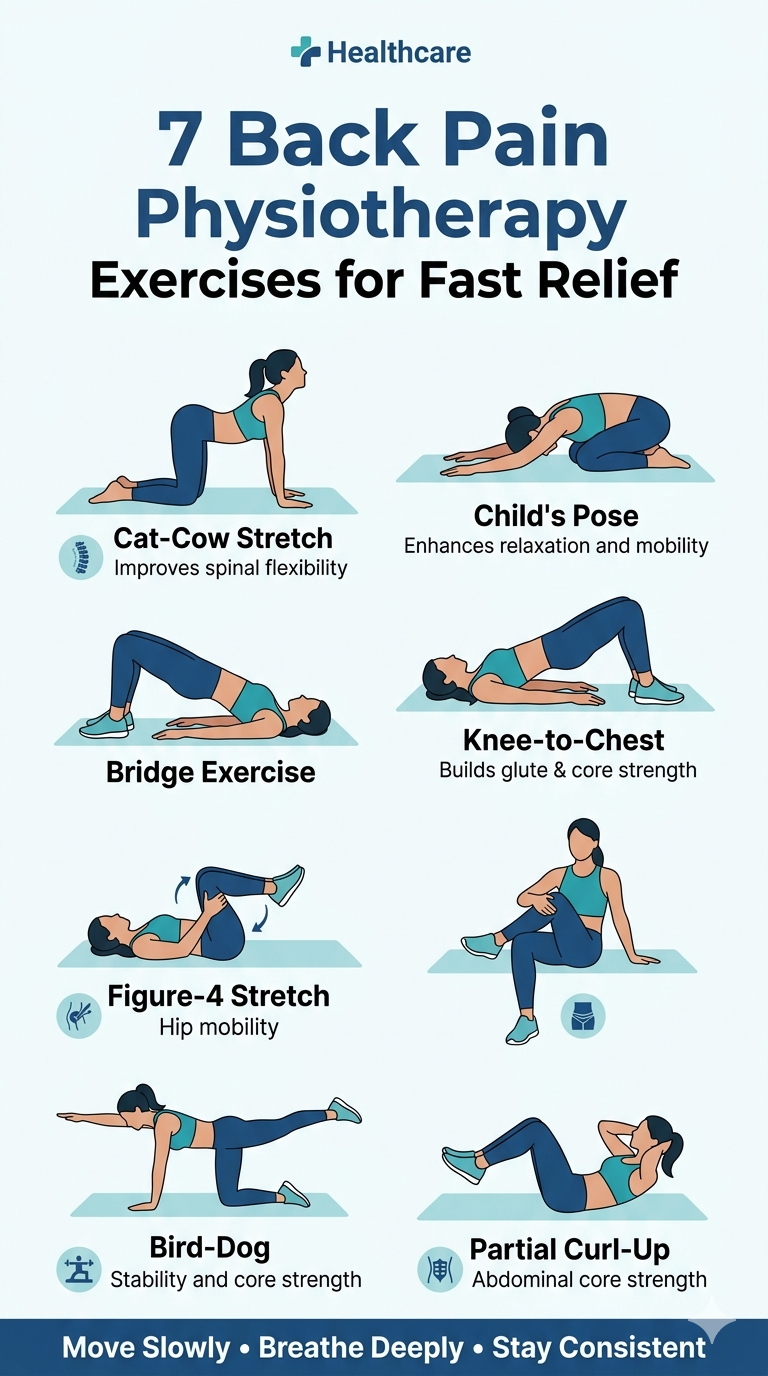
2) Child’s Pose with Arm Reach (Balasana variation)
Kneel on the mat with your knees hip-width apart and your big toes touching. Sit back on your heels and fold forward, resting your forehead on the mat.
Extend one arm forward and the other along your side, then switch sides after a few breaths. The forward reach lengthens your spine and gently stretches the shoulder and upper back.
Keep your hips toward your heels and breathe slowly. If your hips do not reach your heels, place a pillow or folded blanket under them for support.
Hold each reach for 20–30 seconds and repeat 2–3 times per side. Stop if you feel sharp pain; mild tension is normal, but pain is not.
3) Bridging Exercise with Pelvic Tilt
Lie on your back with knees bent and feet flat. Place your hands at your sides and relax your shoulders.
Tilt your pelvis gently by flattening your lower back to the floor. Hold the tilt for two to three seconds, then release.
After a few tilts, lift your hips into a bridge while keeping the pelvic tilt. Squeeze your glutes and keep your core steady. Hold the bridge for three to five seconds, then lower slowly.
Repeat for 8–12 repetitions, rest, and do two or three sets. Stop if you feel sharp pain or numbness.
This exercise strengthens your glutes and lower back while teaching pelvic control. It helps reduce stress on spinal discs when you lift or bend.
4) Supine Knee-to-Chest Stretch
Lie on your back with knees bent and feet flat on the floor. Gently draw one knee toward your chest using both hands behind the thigh or shin.
Hold the stretch for 20–30 seconds while breathing slowly. Keep your lower back relaxed and avoid lifting your head.
Release the leg and repeat with the other side two to three times. If both sides feel tight, pull both knees to your chest together for a gentle double stretch.
Stop if you feel sharp pain or numbness. Ask a therapist before trying this if you have recent surgery, a herniated disc, or severe spinal conditions.
5) Piriformis Stretch (Figure-4)
Lie on your back with both knees bent and feet flat on the floor. Cross the ankle of the affected leg over the opposite knee to form a figure-4.
Reach your hands behind the uncrossed thigh and gently pull it toward your chest. Stop if you feel sharp pain; a mild to moderate stretch in the buttock is normal.
Hold the stretch for 20–30 seconds, then relax. Repeat 2–3 times, and perform the move 1–2 times daily as tolerated.
If you cannot reach the thigh, thread your arm through the figure-4 and grasp the shin instead. Breathe slowly and keep your lower back relaxed throughout the stretch.
6) Bird-Dog (Quadruped Arm-Leg Reach)
Start on your hands and knees with a neutral spine. Your hands go under your shoulders and knees under your hips.
Slowly extend your right arm forward while extending your left leg back. Keep your hips level and avoid twisting; hold for 2–5 seconds.
Return to the start and switch sides. Do 8–12 repetitions per side, or as your therapist recommends.
Breathe steadily and keep your core engaged to protect your lower back. Move slowly; control matters more than range of motion.
If you feel pain in your lower back or neck, stop and check your form. You can modify by lifting just an arm or just a leg until you build strength.
7) Partial Curl-Up with Neutral Spine
Lie on your back with one knee bent and the other leg straight. Place your hands under the natural curve of your lower back to keep a neutral spine.
Lift your head and shoulders a few inches off the ground using your abdominal muscles. Keep your neck relaxed and avoid pulling on it with your hands.
Hold the raised position for one to two seconds, then lower slowly. Repeat 8–12 times per side, breathing steadily and keeping your spine aligned.
This exercise strengthens your deep abdominal muscles without bending the lower back. Stop if you feel sharp pain and consult a clinician before continuing.
Understanding the Role of Physiotherapy in Back Pain Relief
Physiotherapy helps you move better and lowers pain by using targeted exercises, hands-on techniques, and education. It aims to fix the specific muscles, joints, and movement patterns that cause your discomfort.
How Therapy Exercises Improve Mobility
Therapy exercises target weak or tight muscles that limit your spine’s motion. Strengthening your core and hip muscles gives your spine better support during daily tasks like lifting and bending.
You will also practice flexibility moves to reduce tightness in hamstrings, glutes, and lower-back muscles. Looser muscles let your joints move through a fuller, safer range without strain.
Balance and control drills teach you how to activate the right muscles at the right time. That improves coordination and lowers the chance of sudden pain flares when you change position or walk.
Therapists progress exercises by changing resistance, range, or speed. That steady challenge builds lasting gains so you keep improving outside clinic sessions.
Common Causes of Musculoskeletal Discomfort
Musculoskeletal back pain often comes from poor posture during sitting, standing, or repetitive tasks. Slouching and forward-head posture increase stress on spinal discs and the lower-back muscles.
Muscle imbalances from long-term sitting or uneven training create extra load on some muscles while others become weak. For example, tight hip flexors and weak glutes commonly pull the pelvis forward and increase lumbar strain.
Degenerative changes in spinal discs or facet joints can cause local pain and stiffness, especially after heavy lifting or twisting. Acute injuries like sprains and strains also produce sharp, localized pain that responds well to targeted rehab.
Lifestyle factors such as lack of exercise, excess body weight, and poor sleep quality make recovery slower. Addressing these together with exercise speeds up your return to normal activities.
Safety Guidelines and Precautions
Pay attention to pain signals, medical history, and red flags that mean you should stop and seek help. Use safe form, progress gradually, and get professional advice when needed.
Identifying When to Avoid Home Exercise
Stop exercises and see a clinician if you have new or worsening numbness, weakness, or sharp leg pain that shoots below the knee. These symptoms can signal nerve compression or a serious condition.
Avoid home exercise if you have fever with back pain, unexplained weight loss, recent trauma (like a fall or car crash), or a history of cancer. These signs need immediate medical evaluation.
If you are pregnant, have osteoporosis, blood clotting disorders, or are on strong pain medicines, check with your healthcare provider before starting any routine. Also pause exercises when pain increases for more than 24–48 hours after a session.
Professional Supervision and Support
Work with a licensed physiotherapist when you have complex back issues, recurrent episodes, or unclear diagnoses. A therapist will assess your movement, tailor exercises to your spine’s condition, and adjust load and range safely.
Ask for hands-on help to learn correct technique, and request written or video instructions for home practice. Request regular reviews every 2–6 weeks until your pain and function improve.
If you experience unexpected side effects—worsening balance, new bladder or bowel problems, or rising leg weakness—seek urgent medical care and stop exercises immediately.