
The best yeast infection treatment for women depends on the severity of the infection and how often it occurs. Yeast infections are one of the most common health issues women face. In fact, around 75% of women will experience at least one yeast infection during their lifetime.
However, not all yeast infections are the same. Some are mild and easy to treat at home. Others are more severe and require prescription medication. Therefore, understanding your options is the first and most important step toward getting the right treatment quickly.
In this article, we will review the 7 best yeast infection treatments for women. We will cover both over-the-counter and prescription options. By the end, you will know exactly which treatment suits your symptoms, lifestyle, and medical history.
What Is a Yeast Infection?
A yeast infection is a fungal infection caused by an overgrowth of a yeast called Candida albicans. This yeast is naturally present in the vaginal area in small amounts. However, when it grows out of control, it causes uncomfortable and sometimes painful symptoms.
The most common symptoms include intense itching, burning, and irritation in the vaginal area. Many women also experience a thick, white, cottage cheese-like discharge. In more severe cases, the vulva may become swollen, red, and very sore.
Yeast infections are not sexually transmitted infections. However, they can occasionally be passed between sexual partners. They are triggered by a range of factors including antibiotic use, hormonal changes, pregnancy, diabetes, and a weakened immune system.
The good news is that most yeast infections respond well to treatment. With the right medication, symptoms typically improve within a few days.
What Causes a Yeast Infection in Women?
Understanding the causes of yeast infections helps you choose the right treatment and prevent future episodes. Several common factors can trigger an overgrowth of Candida.
Antibiotics are one of the most frequent causes. They kill harmful bacteria but also destroy the beneficial bacteria that keep Candida in check. Therefore, many women develop a yeast infection shortly after a course of antibiotics.
Hormonal changes also play a significant role. Fluctuations in oestrogen levels during pregnancy, menstruation, or menopause can disrupt the natural balance of the vaginal environment.
High blood sugar creates an environment where yeast thrives. This is why women with diabetes or poorly controlled blood sugar are more prone to recurring yeast infections.
Tight or synthetic clothing traps heat and moisture in the vaginal area. This creates ideal conditions for yeast to multiply. Therefore, breathable cotton underwear is generally recommended for women prone to yeast infections.
Weakened immune system. Women with conditions that suppress the immune system — such as HIV or those undergoing chemotherapy — are at a higher risk of developing frequent or severe yeast infections.
Over-the-Counter vs Prescription Treatments: What Is the Difference?
Before we review the products, it helps to understand the difference between over-the-counter (OTC) and prescription yeast infection treatments.
Over-the-counter treatments are available without a doctor’s prescription. They are suitable for mild to moderate, uncomplicated infections. Most OTC treatments come as vaginal creams, suppositories, or ovules that are inserted directly into the vagina. They typically work within one to seven days.
Prescription treatments are required for severe, persistent, or recurrent infections. A healthcare provider will prescribe a stronger medication — either a vaginal cream or an oral pill — after assessing your symptoms and medical history.
If you have had a yeast infection before and recognise the symptoms clearly, an OTC treatment is often the right first step. However, if your symptoms are severe, keep returning, or do not improve within a week of treatment, always see a doctor.
Over-the-Counter Yeast Infection Treatments for Women
The following three treatments are available without a prescription. They are well-tested, widely trusted, and suitable for most mild to moderate yeast infections.
1. Miconazole (Monistat) — Best Overall Over-the-Counter Yeast Infection Treatment
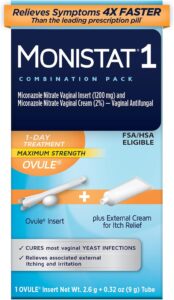
Miconazole, sold most commonly under the brand name Monistat, is the best overall over-the-counter yeast infection treatment for women. It is the most widely used and recognised OTC antifungal treatment available today.
Monistat works by disrupting the cell membrane of the Candida fungus. This stops the yeast from growing and ultimately kills the infection. It is available in three different strengths — 1-day, 3-day, and 7-day formulas.
The 7-day version is the most commonly recommended by healthcare professionals. Although it takes longer to complete the course, it delivers the medication in smaller, gentler doses. This reduces the risk of irritation to vaginal tissue, which can already be sensitive and inflamed during an infection.
The 3-day version is a good middle-ground option for women who want faster results without the intensity of the single-dose treatment. The 1-day version is the strongest concentration and is convenient, but it can cause more initial burning or irritation in some women.
Monistat is available as a vaginal cream, suppository, or combination pack that includes both an internal suppository and an external soothing cream. The external cream provides immediate relief from itching and irritation while the internal treatment targets the infection directly.
Most women notice significant improvement in symptoms within one to three days of starting treatment. However, it is essential to complete the full course — whether that is 1, 3, or 7 days — to ensure the infection is fully cleared.
Key Details:
- Active ingredient: Miconazole nitrate
- Available as: 1-day, 3-day, and 7-day formulas
- Format: Cream, suppository, or combination pack
- Best for: Mild to moderate yeast infections, first-time treatment
- Prescription needed: No
Verdict: Monistat is the best yeast infection treatment for women who want a proven, widely available OTC option with flexible dosing choices. The 7-day version is the gentlest and most recommended by healthcare providers.
2. Clotrimazole (Gyne-Lotrimin) — Best Gentle Over-the-Counter Treatment
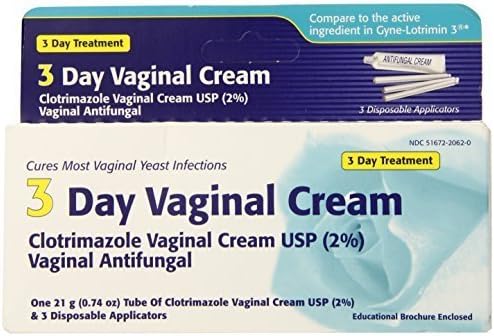
Clotrimazole, sold under the brand name Gyne-Lotrimin, is another highly effective over-the-counter yeast infection treatment for women. It is particularly well-suited to women with sensitive vaginal tissue who may experience irritation from stronger formulas.
Clotrimazole works in the same way as miconazole — by breaking down the fungal cell membrane to stop the infection from growing. It is typically used once daily for three to seven days, depending on the severity of the infection.
The 7-day formula is the most gentle option and is often recommended for women who are pregnant, as it delivers a lower concentration of medication over a longer period. However, pregnant women should always consult their doctor before using any yeast infection treatment.
Gyne-Lotrimin is available as a vaginal cream with a measured applicator. It is easy to use and widely available in pharmacies and online. Many women find it to be one of the most comfortable OTC options because of its smooth, non-irritating formula.
It is important to note that clotrimazole cream can weaken latex condoms and diaphragms. Therefore, alternative contraceptive methods should be used during treatment and for several days afterwards.
Key Details:
- Active ingredient: Clotrimazole
- Available as: Vaginal cream with applicator
- Typical course: 3 to 7 days
- Best for: Mild to moderate infections, sensitive skin, pregnant women (with doctor’s advice)
- Prescription needed: No
Verdict: Clotrimazole (Gyne-Lotrimin) is the best yeast infection treatment for women who need a gentle, well-tolerated OTC option. Its 7-day formula is particularly suitable for those who find stronger treatments too irritating.
3. Tioconazole (Vagistat-1) — Best Single-Dose Over-the-Counter Treatment
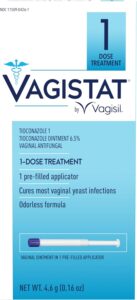
Tioconazole, sold as Vagistat-1, is the best single-dose over-the-counter yeast infection treatment for women who want maximum convenience. It is a one-time ointment applied internally before bedtime, making it one of the simplest treatment options available.
The single-dose format appeals to women with busy lifestyles who want to treat an infection quickly and without a multi-day routine. However, it is important to understand that a single dose does not mean instant results. While the medication is applied in one application, full recovery typically takes up to one week.
Tioconazole is a thick ointment that stays in place effectively overnight. Many users report feeling immediate soothing relief from itching and burning shortly after application. However, some women experience a temporary increase in irritation or burning immediately after insertion, which usually passes quickly.
Vagistat-1 is best suited to women who have previously had a yeast infection, recognise the symptoms clearly, and want a straightforward one-and-done treatment approach. It may not be the best choice for women experiencing a yeast infection for the first time or those with more severe symptoms.
Key Details:
- Active ingredient: Tioconazole 6.5%
- Format: Single-dose vaginal ointment
- Applied: Once, at bedtime
- Recovery time: Up to one week
- Best for: Convenience, busy women, mild to moderate infections
- Prescription needed: No
Verdict: Tioconazole (Vagistat-1) is the best yeast infection treatment for women who prioritise convenience above all else. One application is all it takes — although patience is needed as the full course of recovery still takes several days.
Prescription Yeast Infection Treatments for Women
The following four treatments require a prescription from a healthcare provider. They are designed for severe, persistent, or recurrent yeast infections that do not respond adequately to over-the-counter options.
4. Fluconazole (Diflucan) — Best Prescription Oral Yeast Infection Treatment
Fluconazole, sold under the brand name Diflucan, is the most widely prescribed oral yeast infection treatment for women. It is a single-pill oral medication that is highly effective for most uncomplicated to moderate yeast infections.
Unlike vaginal creams and suppositories, fluconazole works from the inside out. It travels through the bloodstream to fight the Candida infection systemically throughout the body. For most women, a single 150mg dose is all that is needed to clear the infection completely.
For more severe infections, a second dose may be taken 72 hours after the first. This two-dose approach is typically recommended when symptoms are particularly intense or when the infection has been present for a longer period of time.
Many women prefer fluconazole because it requires no internal application. It is simply taken as an oral pill — which many find more comfortable and discreet than vaginal treatments. Results are usually noticeable within 24 to 48 hours of taking the medication.
It is important to note that fluconazole can interact with certain medications. Always inform your doctor of any other medications you are taking before being prescribed Diflucan.
Key Details:
- Active ingredient: Fluconazole
- Format: Oral pill
- Typical dose: Single 150mg pill; second dose at 72 hours for severe cases
- Best for: Most yeast infections, women who prefer oral treatment
- Prescription needed: Yes
Verdict: Fluconazole (Diflucan) is the best prescription yeast infection treatment for women who want a simple, effective oral option. Its single-dose convenience and high success rate make it the most popular prescription choice worldwide.
5. Terconazole (Terazol) — Best Prescription Vaginal Treatment
Terconazole, sold as Terazol, is a prescription-strength vaginal cream or suppository used for three to seven days. It is prescribed for moderate to severe yeast infections that have not responded to standard OTC treatments.
Terconazole is a more potent antifungal agent than miconazole or clotrimazole. It targets a broader range of Candida strains, including some that are resistant to common OTC treatments. Therefore, it is a particularly useful option for women whose infections keep returning despite repeated OTC treatment.
It is available in two strengths — Terazol 3 (used for three days) and Terazol 7 (used for seven days). Your doctor will advise which strength is most appropriate based on your specific symptoms and history.
Like clotrimazole, terconazole cream can weaken latex condoms and diaphragms. Use alternative contraception during and after treatment.
Key Details:
- Active ingredient: Terconazole
- Format: Vaginal cream or suppository
- Typical course: 3 to 7 days
- Best for: Moderate to severe infections, OTC treatment failures, resistant strains
- Prescription needed: Yes
Verdict: Terconazole (Terazol) is the best prescription vaginal yeast infection treatment for women dealing with persistent or more resistant infections. Its broader antifungal coverage makes it a strong step up from standard OTC options.
6. Ibrexafungerp (Brexafemme) — Best New Prescription Treatment for Resistant Infections
Ibrexafungerp, sold as Brexafemme, is one of the newest and most innovative yeast infection treatments available for women today. It was approved by the FDA in 2021 and represents a significant advancement in antifungal therapy.
Unlike older antifungal medications, ibrexafungerp works through a completely different mechanism. It inhibits an enzyme called glucan synthase, which is essential for building the fungal cell wall. This makes it highly effective against Candida strains that have developed resistance to standard azole antifungals like fluconazole.
Brexafemme is taken as an oral tablet — two doses on the same day, four hours apart. This makes it exceptionally convenient. It is specifically prescribed for women whose infections have not responded to other treatments, including fluconazole.
Because it targets a different part of the fungal cell, Brexafemme is effective even when other medications have failed. This makes it a genuinely important option for women who experience recurrent or treatment-resistant yeast infections.
Key Details:
- Active ingredient: Ibrexafungerp
- Format: Oral tablet
- Dosing: Two tablets taken on the same day, four hours apart
- Best for: Treatment-resistant infections, recurrent yeast infections, fluconazole failures
- Prescription needed: Yes
Verdict: Ibrexafungerp (Brexafemme) is the best yeast infection treatment for women dealing with stubborn, recurring infections that have not responded to other medications. Its innovative mechanism of action makes it a powerful new tool in the fight against resistant Candida.
Quick Comparison: 7 Best Yeast Infection Treatments for Women
| Product | Type | Format | Course Length | Prescription Needed | Best For |
|---|---|---|---|---|---|
| Miconazole (Monistat) | OTC Antifungal | Cream/suppository | 1, 3, or 7 days | No | Best overall OTC |
| Clotrimazole (Gyne-Lotrimin) | OTC Antifungal | Vaginal cream | 3 to 7 days | No | Sensitive skin |
| Tioconazole (Vagistat-1) | OTC Antifungal | Ointment | Single dose | No | Maximum convenience |
| Fluconazole (Diflucan) | Prescription Oral | Pill | 1 to 2 doses | Yes | Most infections, oral preference |
| Terconazole (Terazol) | Prescription Vaginal | Cream/suppository | 3 to 7 days | Yes | Persistent infections |
| Ibrexafungerp (Brexafemme) | Prescription Oral | Tablet | Two doses, one day | Yes | Treatment-resistant infections |
Tips for Preventing Yeast Infections
Treating a yeast infection is important. However, preventing future episodes is even better. Here are some simple and practical steps you can take.
Wear breathable underwear. Cotton underwear allows air to circulate and reduces moisture buildup. Avoid tight synthetic fabrics that trap heat and create ideal conditions for yeast to grow.
Avoid scented products. Scented soaps, bubble baths, and feminine hygiene sprays can disrupt the natural bacterial balance of the vaginal area. Use mild, unscented products instead.
Change out of wet clothing quickly. Wet swimwear and sweaty workout clothes should be changed as soon as possible. Prolonged moisture exposure encourages yeast growth.
Take probiotics during antibiotic courses. If you frequently develop yeast infections after antibiotics, ask your doctor about taking a probiotic supplement alongside the antibiotic course. This can help maintain healthy bacterial balance.
Manage blood sugar carefully. If you have diabetes, keeping your blood sugar well controlled is one of the most effective ways to reduce your risk of recurrent yeast infections.
When Should You See a Doctor?
Most mild yeast infections respond well to over-the-counter treatment. However, there are situations where you should always seek medical advice.
See a doctor if this is your first yeast infection and you are not certain of the diagnosis. Also consult a healthcare provider if your symptoms do not improve within a week of OTC treatment, if the infection returns within two months, or if you experience four or more infections in a year.
In addition, always see a doctor if you are pregnant, have diabetes, or have a weakened immune system before starting any yeast infection treatment.
Final Thoughts: Choosing the Best Yeast Infection Treatment for Women
Yeast infections are uncomfortable and disruptive. However, they are also very treatable when you choose the right medication.
For mild to moderate infections, Miconazole (Monistat) is our top overall OTC pick. It is trusted, flexible, and widely available. If you prefer a gentler option, Clotrimazole (Gyne-Lotrimin) is excellent. For pure convenience, Tioconazole (Vagistat-1) offers a simple single-dose solution.
For more severe or persistent infections, Fluconazole (Diflucan) is the most commonly prescribed and highly effective oral option. Meanwhile, Terconazole (Terazol) provides stronger vaginal treatment for resistant cases. Finally, Ibrexafungerp (Brexafemme) is the most advanced option for women whose infections have failed to respond to everything else.
In conclusion, the best yeast infection treatment for women is the one that matches the severity of your infection and fits your lifestyle. When in doubt, always consult your doctor — fast, accurate treatment is always better than delayed or incorrect self-treatment.