
Finding the best treatment for yeast infection in dogs can feel overwhelming with so many shampoos, sprays, and wipes available. Some products target the skin directly, while others focus on ears or long-term gut health.
Here are the 6 Best Treatment for Yeast Infection in Dogs:
- Nizoral Ketoconazole Pet Shampoo – Treats widespread skin yeast overgrowth in dogs with the antifungal ingredient ketoconazole.
- MiconaHex+Triz Spray Conditioner – Targets yeast and bacterial skin concerns with a convenient leave-on antifungal and antiseptic spray.
- Douxo S3 PYO Medicated Dog Shampoo – Supports dogs with combined bacterial and yeast skin concerns through chlorhexidine-based antibacterial and antiseptic action.
- 2% Chlorhexidine Wipes for Dogs – Provides convenient spot treatment for localized yeast, ringworm, and hot spots without rinsing.
- Zymox Otic Enzymatic Solution – Targets ear-related yeast issues while hydrocortisone helps soothe itching and discomfort.
- Probiotics for Dogs (240 Chews) – Supports gut health and may help with long-term prevention of recurring yeast issues.
What Makes the Best Treatment for Yeast Infection in Dogs? Our Ranking Criteria
Before jumping into the reviews, it helps to understand what separates a strong product from an average one. We looked at active ingredients, how directly each product addresses yeast, ease of use for both you and your dog, and overall value.
We also considered where each product works best on the body. Some options treat skin-wide yeast issues, while others focus specifically on ears or support long-term prevention. Keep your dog’s specific symptoms in mind as you read through the list.
1. Nizoral Ketoconazole Pet Shampoo

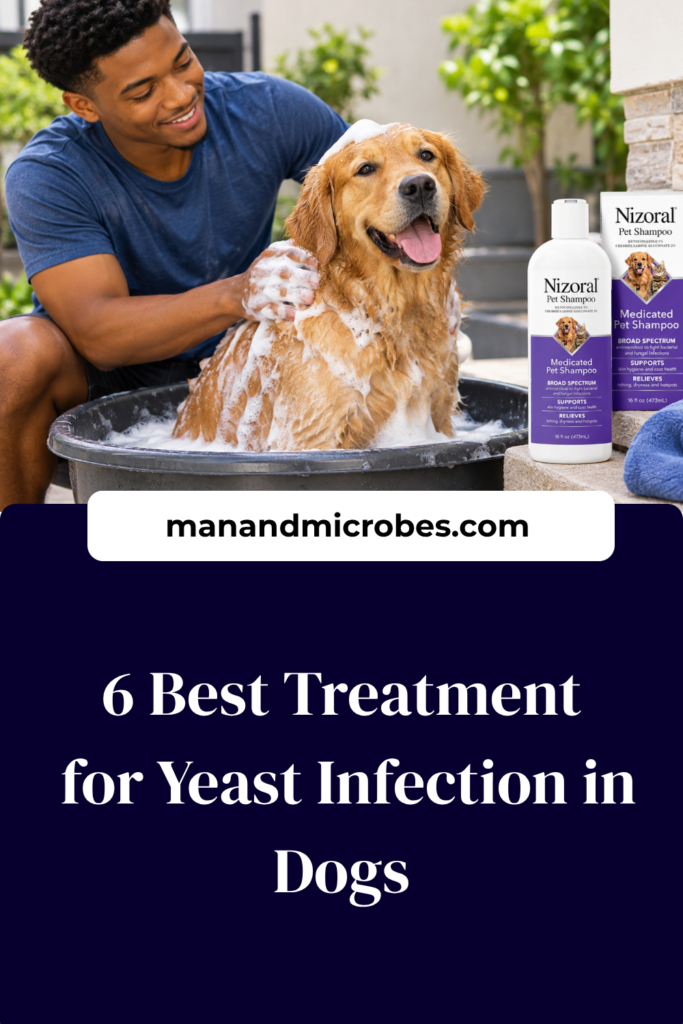
Nizoral’s Pet Shampoo takes the top spot as our pick for the best treatment for yeast infection in dogs overall. The active ingredient, ketoconazole, is a well-established antifungal used specifically to address yeast overgrowth on the skin. Because it works directly against the yeast itself, many pet owners turn to it as a primary treatment rather than a supportive one.
You wet your dog’s coat thoroughly, apply the shampoo, and let it sit for several minutes before rinsing. This contact time matters, since ketoconazole needs a few minutes on the skin to work effectively. Because the bottle contains 16 ounces, it lasts through multiple baths, which is useful since yeast treatment often requires a consistent bathing schedule.
Why Nizoral Ranks as a Best Treatment for Yeast Infection in Dogs Choice
This shampoo works especially well for dogs with widespread skin yeast issues rather than a single localized spot. Therefore, it suits dogs with recurring odor, greasy patches, or itching linked to yeast overgrowth across the body. However, always check with your vet before starting a new shampoo routine, especially for dogs with sensitive skin or other health conditions.
Real user experience: Olivia from Manchester used this shampoo for her dog’s recurring skin odor and itching. “I bathed him twice a week as my vet suggested. The smell improved within the first couple of washes, and his skin looked noticeably better after a few weeks.”
Ryan from Cork shared, “My dog tolerated the shampoo well, and the scent afterward was much fresher than before. It became part of our regular grooming routine.”
Pros:
- Contains a well-established antifungal active ingredient
- Large bottle size supports a full treatment course
- Works well for widespread skin yeast concerns
Cons:
- Requires several minutes of contact time for best results
- Not a substitute for a vet visit if symptoms are severe
Verdict: This shampoo suits dogs dealing with broader skin yeast issues who need a direct, well-established antifungal option. It stands out as the best treatment for yeast infection in dogs when the issue covers a larger area of the coat.
2. MiconaHex+Triz Spray Conditioner

MiconaHex+Triz earns second place by combining miconazole, an antifungal, with chlorhexidine, an antiseptic, in one convenient spray. Because it works as a leave-on conditioner rather than a rinse-off shampoo, it fits easily between regular baths. This makes it a practical option for maintaining treatment on days when a full bath is not necessary.
You simply spray it onto clean, dry fur and gently massage it in, leaving it on the coat rather than rinsing. Because it targets both fungal and bacterial concerns at once, it works well for dogs whose skin issues involve more than just yeast. In addition, it works on cats and horses, which adds versatility if you have multiple pets at home.
Real user experience: Grace from Bristol used this spray on her dog’s paws, where yeast tends to build up between the toes. “It is easy to apply without a full bath, which is great for a quick touch-up. My dog’s paws smelled and looked much better after regular use.”
Sean from Galway added, “I like that it works between baths. My dog’s skin seemed calmer, and the itching reduced noticeably within a couple of weeks.”
Pros:
- Combines antifungal and antiseptic action in one product
- Convenient leave-on spray fits between baths
- Works across multiple pet species
Cons:
- Less thorough coverage than a full shampoo for widespread issues
- May require more frequent application for ongoing maintenance
Verdict: This spray works best for dogs with localized yeast concerns, such as paws or skin folds, who need easy maintenance between full baths.
3. Douxo S3 PYO Medicated Dog Shampoo

Douxo S3 PYO takes third place with its 3% chlorhexidine formula, which is clinically studied for antibacterial and antiseptic use. While chlorhexidine is not a dedicated antifungal like ketoconazole or miconazole, it does help manage the skin environment that allows yeast to thrive. This makes it a solid supporting option, particularly for dogs with combined bacterial and yeast concerns.
You apply the shampoo to wet fur, lather thoroughly, and let it sit for several minutes before rinsing. Because the formula is described as clinically proven, many pet owners feel confident using it as part of a vet-recommended routine. However, since it leans more toward antibacterial action, it may work best alongside a dedicated antifungal product for yeast-heavy cases.
Real user experience: Hannah from Leeds used this shampoo after her vet recommended a chlorhexidine-based option. “It lathered well, and my dog’s skin looked calmer after a few washes. I used it alongside a separate antifungal treatment for the yeast issue specifically.”
Tom from Belfast noted, “It is gentle enough for regular use, and my dog did not seem irritated by it. It felt like a good supporting product in our overall routine.”
Pros:
- Clinically studied antibacterial and antiseptic formula
- Gentle enough for regular bathing
- Works well alongside targeted antifungal treatments
Cons:
- Not a dedicated antifungal ingredient on its own
- May need pairing with another product for yeast-specific concerns
Verdict: This shampoo suits dogs with combined skin concerns who need a gentle, clinically studied option, ideally as part of a broader routine guided by a vet.
4. 2% Chlorhexidine Wipes for Dogs

These chlorhexidine wipes land in fourth place, offering a convenient spot-treatment option rather than a full bath. Because the wipes are described as 3X larger than standard options, they cover more surface area per wipe, which helps with larger dogs or bigger affected patches. The formula addresses yeast, ringworm, and hot spots, making it a versatile choice for localized issues.
You simply wipe the affected area on clean, dry skin as needed throughout the week. Because wipes require no rinsing, they work well for quick touch-ups between baths or for areas that are hard to treat with a full shampoo session. However, for widespread yeast issues, a shampoo or leave-on spray likely offers more thorough coverage.
Real user experience: Aoife from Dublin used these wipes on her dog’s paw pads and skin folds. “They are gentle and easy to use without a full bath. The itching in the folds calmed down after using them consistently for about two weeks.”
Conor from Limerick shared, “The larger size makes them practical for bigger patches. My dog tolerated them well, and the area looked less irritated over time.”
Pros:
- Convenient, no-rinse spot treatment
- Larger wipe size covers more area per use
- Addresses yeast, ringworm, and hot spots
Cons:
- Less effective for widespread yeast across the whole coat
- Requires regular reapplication for ongoing issues
Verdict: These wipes work best for localized yeast or skin irritation, particularly in paw pads, skin folds, or hard-to-reach spots.
5. Zymox Otic Enzymatic Solution

Zymox Otic takes fifth place as a dedicated ear treatment rather than a full-body option. The enzymatic formula works alongside 1% hydrocortisone to soothe itching, which makes it particularly useful for dogs whose yeast issues concentrate in the ears rather than the skin. Because ear yeast infections can cause significant discomfort, this targeted approach offers meaningful relief in that specific area.
You apply a few drops into the ear canal as directed, allowing the solution to work without needing to rinse afterward. Because the pack includes two bottles, it supports a longer treatment course or use across multiple pets. However, since it focuses solely on the ears, it will not address yeast issues elsewhere on the body.
Real user experience: Rachel from Cardiff used this for her dog’s recurring ear itching. “The hydrocortisone seemed to calm the itching quickly. Within a week, my dog was shaking his head much less than before.”
Niall from Waterford added, “It is easy to apply, and my dog did not fight it too much. The ear looked and smelled better after consistent use.”
Pros:
- Targeted formula specifically for ear yeast concerns
- Hydrocortisone helps calm itching quickly
- Two-bottle pack supports a longer treatment course
Cons:
- Only addresses the ears, not skin elsewhere on the body
- Requires consistent application for full results
Verdict: This solution suits dogs specifically dealing with ear-related yeast and itching, rather than broader skin issues across the coat.
6. Probiotics for Dogs (240 Chews)

Rounding out our list are these dog probiotic chews, which take a preventive rather than direct treatment approach. The formula aims to support gut health, which some pet owners believe plays a role in overall yeast balance in dogs prone to recurring issues. However, probiotics work gradually and do not treat an active yeast infection on the skin or in the ears directly.
You give your dog one chew daily, which makes it an easy addition to their regular feeding routine. Because the pack includes 240 chews, it offers a long supply for ongoing daily use. This makes it a reasonable long-term addition alongside topical treatments, rather than a replacement for them.
Real user experience: Emily from Edinburgh added these chews to her dog’s routine after treating an active yeast flare-up. “My dog likes the taste, so it is an easy daily habit. We have not had a flare-up return since we started using them alongside his regular grooming routine.”
Declan from Kilkenny shared, “It is more of a long-term support product in my experience. I still needed a proper shampoo when symptoms were active, but this seems to help with prevention.”
Pros:
- Long-lasting supply for daily use
- Easy, tasty format for regular dogs
- May support long-term prevention alongside other treatments
Cons:
- Does not treat an active yeast infection directly
- Benefits take time to build with consistent use
Verdict: These chews work best as a long-term supportive product for dogs prone to recurring yeast issues, rather than a solution for an active infection.
Comparing the 6 Products Side by Side
| Product | Best For | Format | Speed of Results |
|---|---|---|---|
| Nizoral Ketoconazole Shampoo | Widespread skin yeast | Shampoo | Fast |
| MiconaHex+Triz Spray | Localized areas, between baths | Spray | Moderate |
| Douxo S3 PYO Shampoo | Combined bacterial and yeast concerns | Shampoo | Moderate |
| Chlorhexidine Wipes | Spot treatment, paws and folds | Wipe | Moderate |
| Zymox Otic Solution | Ear-specific yeast and itching | Ear drops | Moderate |
| Probiotics for Dogs | Long-term prevention | Chew | Gradual |
Each product plays a different role depending on where your dog’s symptoms show up and how widespread they are. A dog with an ear infection needs a different approach than one with yeast across the coat.
Final Recommendation: Which Is the Best Treatment for Yeast Infection in Dogs?
After comparing all six options, Nizoral Ketoconazole Pet Shampoo stands out as the best treatment for yeast infection in dogs overall. Its dedicated antifungal ingredient and full-coat coverage make it a dependable choice for widespread yeast concerns on the skin.
That said, no single product fits every situation. If your dog’s symptoms concentrate in the ears, Zymox Otic offers more targeted relief. Meanwhile, sprays, wipes, and probiotics work well as supporting tools for localized spots or long-term prevention.
In conclusion, the best treatment for yeast infection in dogs usually depends on where the symptoms appear and how widespread they are. Whichever product you choose, it is always worth checking with your vet, especially for recurring or severe symptoms.
This article is for informational purposes only and does not replace advice from a licensed veterinarian. If your dog’s symptoms persist or worsen, consult your vet before starting any new treatment.